
Barbarians within the UN gates
The barbarian of the past at least had the decency to confront his enemy. The modern barbarian can identify a small boat from the sky, fire a missile and work out the justification afterwards.
Just In
There are moments in history when satire becomes almost impossible because reality has already written the joke.
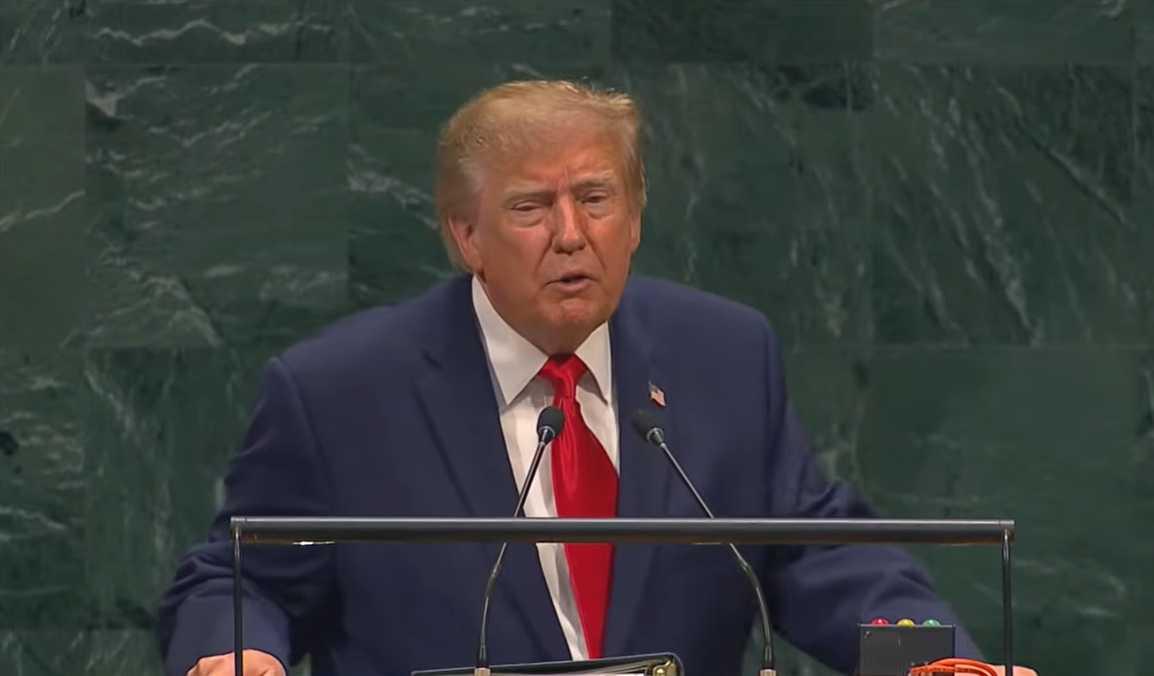
Donald Trump provided one of those moments on Sept 22 when he stood before the United Nations General Assembly and threatened that the US could “annihilate” Iran if Tehran did not accept a peace deal.
The irony would be delicious if the consequences were not so deadly. Here was the president of the world's most powerful military state, standing in the very institution created after the devastation of the Second World War, announcing that one of the choices before him was whether to make an entire country disappear.
Let us refresh our memories.
The UN was established in 1945 after humanity had experienced the industrial-scale slaughter of the Second World War. Its founders had supposedly learned something.
Article 1 of the UN Charter says the organisation exists to maintain international peace and security, prevent threats to peace, and settle disputes by peaceful means and in accordance with international law.
Article 2 requires states to settle disputes peacefully and to refrain from the threat or use of force against the territorial integrity or political independence of other states.
Beautiful words. Unfortunately, they were apparently printed in very small type. Because 81 years later, the president of the United States walks into the UN General Assembly and effectively says: “Make a deal or I may annihilate you”.
The decision, apparently, is whether millions of human beings should continue living. A few days ago, he even threatened to “bomb Iran into the stone age”.
This is not diplomacy. It is the language of the medieval warlord. The barbarians have upgraded their weapons. The barbarians of the Middle Ages arrived on horseback.
Today's barbarians arrive with stealth bombers. The medieval conqueror carried a sword. The modern one carries a nuclear arsenal. The medieval warlord might threaten to burn a city. The modern superpower threatens to annihilate a country, and then walks into the UN to explain why it is necessary.
The UN human-rights system has documented the enormous civilian toll of the US-Israeli attacks on Iran, including children killed and civilian infrastructure damaged. The Minab school attack alone killed more than 150 people, with children among the victims, according to UN reporting. And after the bombs have fallen, after the children have died, after the schools and hospitals have been hit, the man responsible for one of the world's most formidable arsenals comes to the UN and says he might annihilate Iran.
Executions, kidnapping and sanctions
What exactly is the appropriate diplomatic response to this?
Iran is not an isolated case. Across the Caribbean and eastern Pacific, Washington has pursued another extraordinary experiment in executive power.
The Washington Office on Latin America (Wola) has documented dozens of US military strikes on boats under what the Trump administration calls “Operation Southern Spear”. Its July report recorded 221 people killed in 63 attacks and argued that the strikes amounted to extrajudicial executions under international human-rights law.
Wola also raised concerns that people aboard the boats were sometimes not positively identified and that evidence of drugs aboard the vessels was not necessarily established before lethal force was used.
The administration disputes the legal and factual characterisation of its operations. But the basic question is surely not controversial: Since when did accusation become a death sentence?
The old barbarian at least had the decency to confront his enemy. The modern barbarian can identify a small boat from the sky, fire a missile and let lawyers work out the justification afterwards.
And if some of the people killed were fishermen, migrants or low-level couriers rather than combatants, as Wola reports, what happened to the ancient legal principle of due process? Perhaps that principle, too, has been placed on the sanctions list.
Then came Venezuela. In January 2026, US forces captured Venezuelan President Nicolás Maduro and transported him to the US to face criminal charges. Maduro described the operation as a kidnapping; international law experts raised serious questions about the legality of the use of force against Venezuela.
Imagine the reaction if another country sent troops into Washington, seized the American president in the White House and flew him to a foreign prison. Would Washington call it a kidnapping? Of course not. It would probably call it an act of war.
Then there is Cuba. The dictionary of imperial power is wonderfully flexible. Cuba must be punished for refusing to disappear. For decades, Washington has maintained its campaign of economic pressure against the island.
In 2026, the Trump administration intensified sanctions and other measures against Cuba, while Trump told the UN that the communist government would soon fall. The US calls them pressure for freedom.
UN, equality and the irony of it all
And now we come to the most exquisite irony of all. The UN supposedly rests on the sovereign equality of its members, except that the US controls the front door.
This year Washington denied Palestinian President Mahmoud Abbas a visa to attend UNGA in person. UNGA subsequently voted overwhelmingly—152 votes to 3—to allow Abbas to address the gathering by video because he could not travel to New York.
But Benjamin Netanyahu was able to come and address the UN. Netanyahu is not merely a controversial politician. The International Criminal Court issued an arrest warrant for him in November 2024, stating that its judges found reasonable grounds to believe he bore criminal responsibility for alleged war crimes and crimes against humanity, including starvation as a method of warfare, murder and persecution.
Those are allegations and judicial findings at the warrant stage, not a conviction. Yet Netanyahu gets the podium. What a magnificent advertisement for sovereign equality.
And what happened to “Never Again”? The UN was born from a world that had seen Auschwitz, Hiroshima, the destruction of European cities and the slaughter of millions.
“Never again” was not supposed to mean “Never again unless we have better missiles”. It was supposed to mean that international relations could no longer be governed by the principle that the powerful do whatever they please and the weak suffer whatever they must. This is not a rules-based international order. It is rules-based imperialism: rules for others, exceptions for ourselves.
UN cannot remain America's backyard
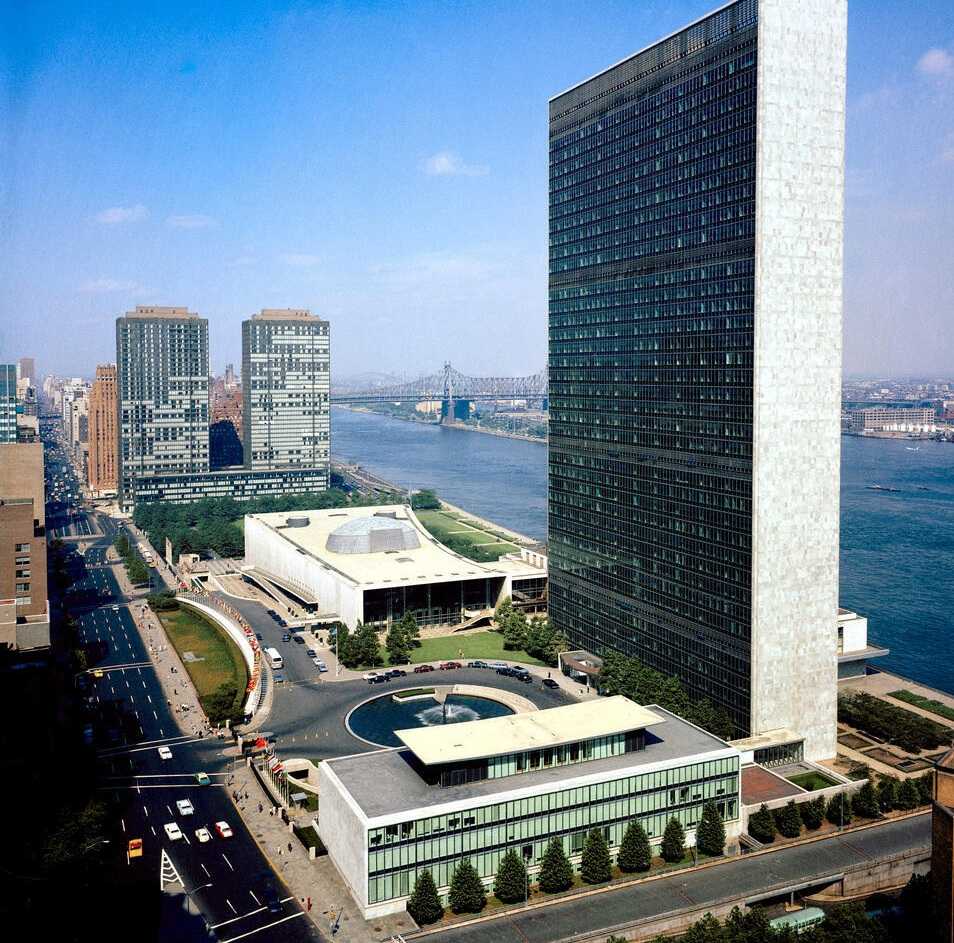 The time has therefore come for a serious debate about something that would once have seemed unthinkable: Should the principal headquarters of the UN remain in the US?
Why should the world's principal organisation for peace be physically located inside the territory of the world's most barbaric military power? Why should the host country have such extraordinary leverage over who can physically attend its meetings?
Geneva, Switzerland, should be seriously considered. Switzerland has a long-established tradition of neutrality and already hosts numerous international organisations. Moving the UN's principal headquarters there would not magically solve the organisation's political problems, but it would make an important institutional statement: The UN belongs to the world, not to its host government.
The UN should not have to ask Washington for permission before the world's nations can meet in the world's supposedly universal house. The barbarians are already inside the gates. The real danger is not simply Donald Trump. Presidents come and go.
The greater danger is the normalisation of the idea that military might gives a country the right to decide who lives, who dies, who enters, who speaks and which governments survive. That is precisely the world the UN was supposed to help humanity escape.
Trump's threat to “annihilate” Iran therefore deserves to be remembered not merely as another outrageous presidential remark. It should be remembered as a symbol of how far the post-war international order has fallen.
The UN was created to tame the law of the jungle. Now the jungle has acquired a diplomatic pass. The barbarians no longer need to storm the gates. They have been given microphones, motorcades and front-row seats.
That is why the rest of the world must insist: The UN must belong to all nations – or it belongs to none.
Kua Kia Soong is a former MP and director of human rights group Suaram.
The views expressed in this article are those of the author(s) and do not necessarily reflect the position of MalaysiaNow.
See more of our coverage in your search results.
Subscribe to our newsletter
To be updated with all the latest news and analyses daily.