
From Myanmar to Aceh, and now Malaysia: How the Israel-Myanmar playbook is fuelling hate against the Rohingya
Stark parallels exist between Myanmar’s persecution of the Rohingya and Israel’s atrocities against Palestinians, and now an online campaign using bots and fake accounts calling for their expulsion.
Just In
The recent spike in online hate targeting Rohingya refugees in Malaysia is largely driven by misinformation and xenophobic rhetoric, spread by bots and fake social media accounts using hundreds of AI-generated videos to turn public hostility against refugee and migrant communities.
The disinformation campaign is similar to the one played out in Aceh in 2023, when an online hate drive spurred locals to demand the expulsion of Rohingya refugees, just months ahead of the Indonesian presidential election.
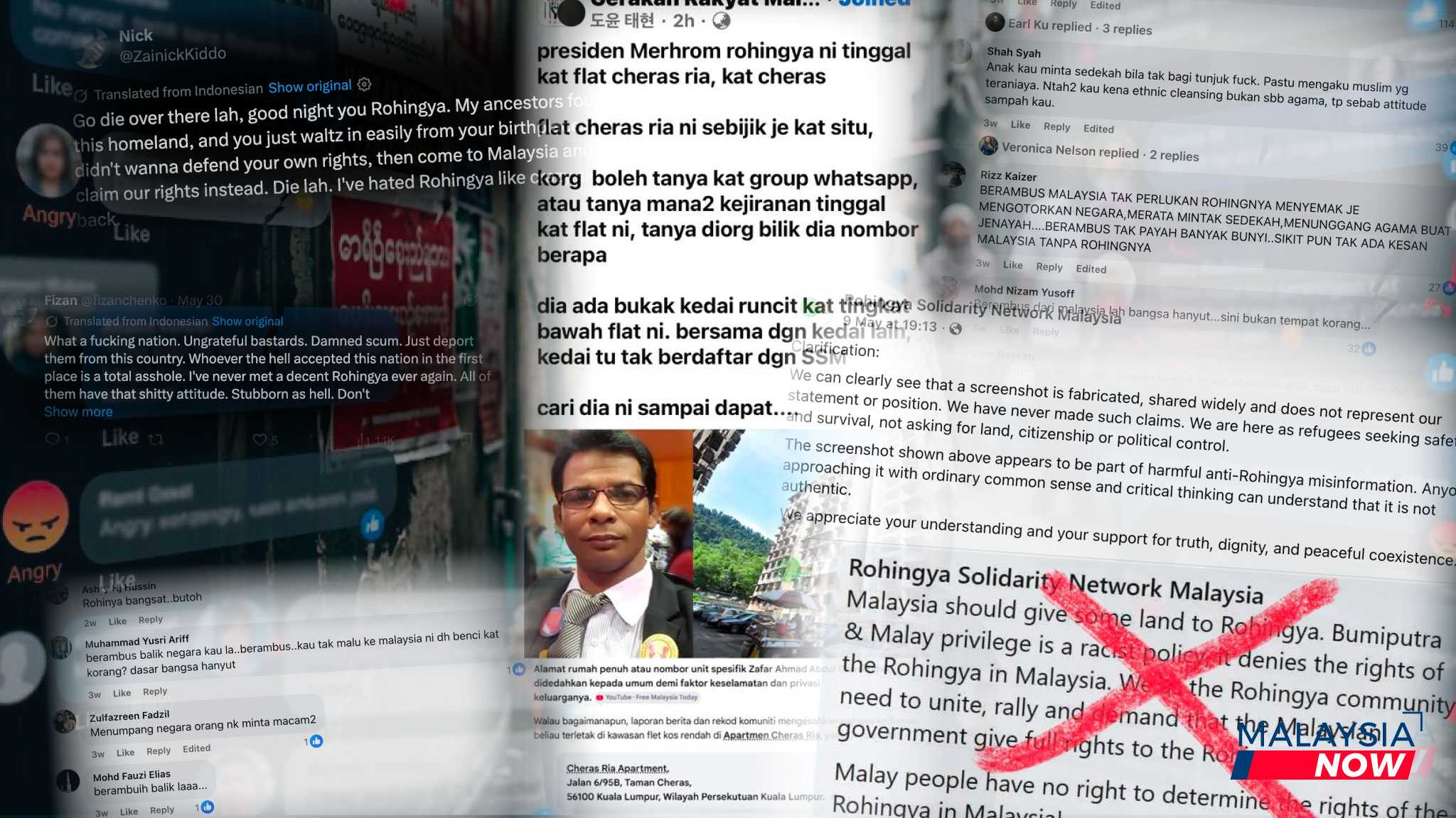 Checks revealed that the explosion of online content did not originate in Aceh, but elsewhere, and was carefully coordinated to produce maximum impact among locals, and ultimately to pressure presidential candidates.
“It was professionally [made] content,” Ann Mayman, the UN refugee agency UNHCR’s Indonesian representative, was quoted as saying by Britain’s The Guardian in January 2024.
“It was not made in a fisherman’s hut on a beach in Aceh. This was professionally made and there were a lot of bots involved.”
Similar to the posts now flooding Malaysians’ social media feeds and video platforms, they often portray Rohingya as ungrateful, a drain on resources and a danger to local people, with demands for the authorities to deport them even if it means putting their lives at risk in the hands of a military junta that has killed tens of thousands of its Muslim citizens.
For decades, Myanmar authorities and nationalist movements led by extremist Buddhist monks have systematically portrayed the Rohingya as foreigners who do not belong in the country. They were repeatedly described as illegal Bengali immigrants despite longstanding evidence of their presence in Arakan, now known as Rakhine State.
Myanmar authorities helped create the perception that they were not a native community with legitimate rights, but an alien population whose presence posed a threat to the country.
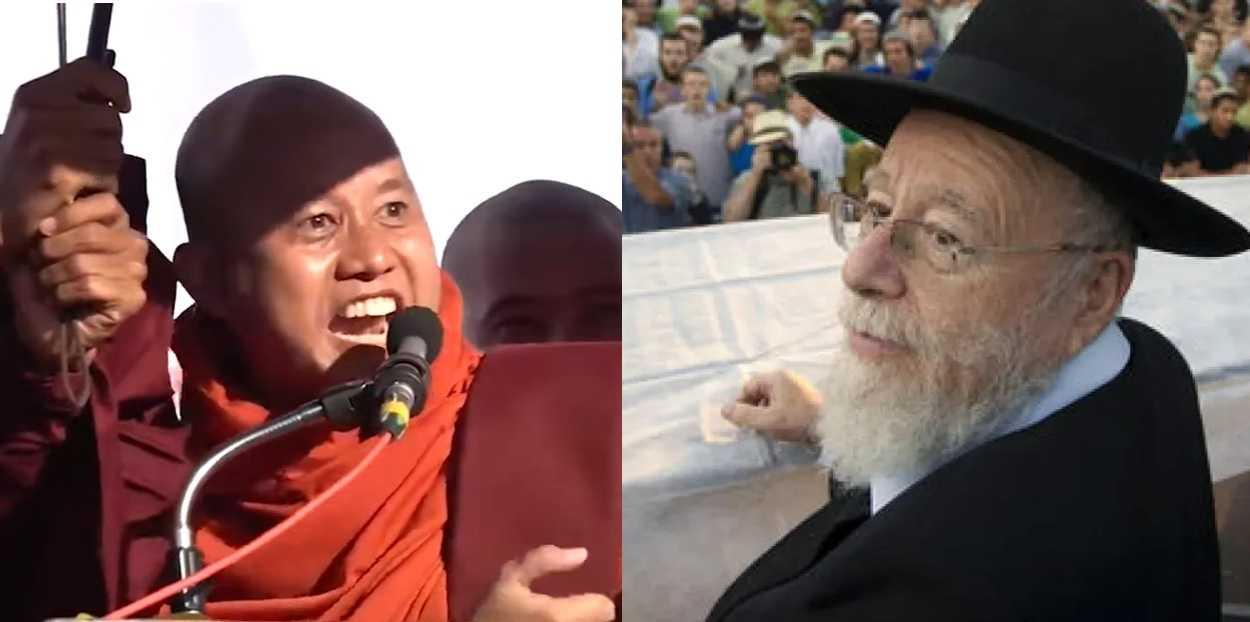
Among those spreading such a claim is Ashin Wirathu, the most prominent extremist and ultra-nationalist Buddhist monk in Myanmar, known for his inflammatory anti-Muslim rhetoric.
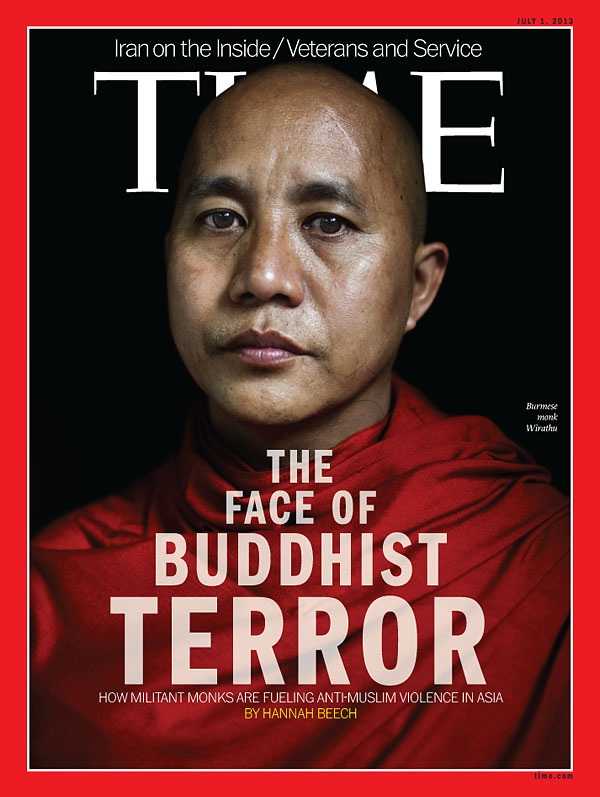 In 2013, the cover of Time magazine declared Wirathu “The Face of Buddhist Terror”. In many ways, he is the Burmese counterpart of extremist Israeli rabbi Dov Lior, who has openly called for Palestinians to be exterminated.
In 2016, when the Myanmar junta launched a brutal operation that included extrajudicial killings, sexual violence and burning of Rohingya villages, Wirathu celebrated Donald Trump’s election victory, saying they both “are protecting against the dangers of Islamisation”.
Wirathu’s other views is that US President Barack Obama was “tainted by black Muslim blood”, Arabs have hijacked the UN, and that around 90% of Muslims in Myanmar are “radical bad people”. That last view, that the Rohingya people are "bad", has now become a slogan of the hate campaign in Malaysia.
The Israel connection
In a bid to evoke Malay-Muslim anger, one narrative in the hate campaign even compares Rohingya Muslims to Jewish illegal settlers who eventually usurped Palestinian lands, warning locals that their lands would also one day be taken over by these refugees.
It is exactly the same narrative that was spread to locals in Aceh.
The truth is Myanmar’s long-rooted ethnic cleansing of its Rohingya minority was not only inspired by Israel, but also found support from the Zionist regime.
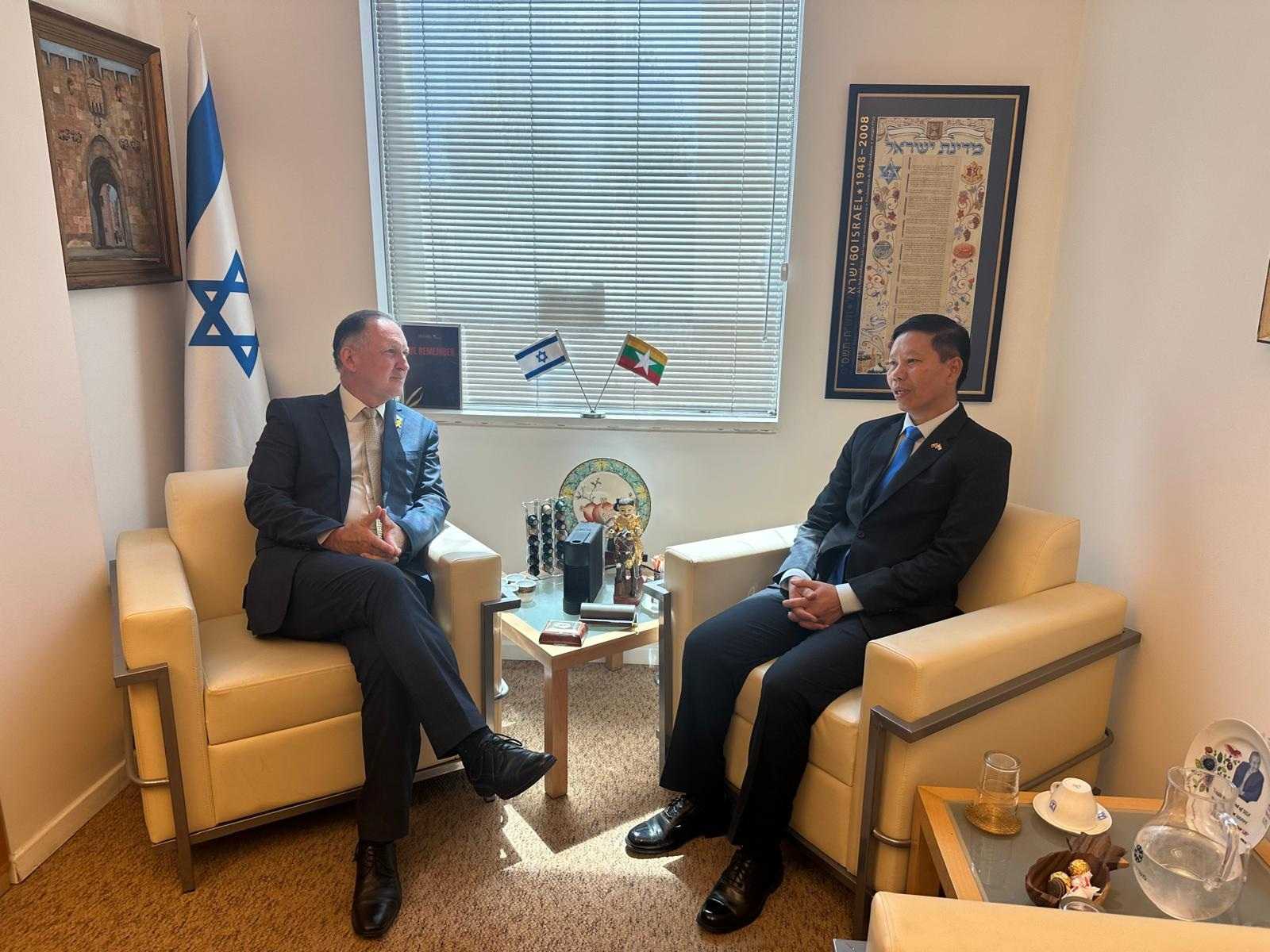
For starters, the Myanmar junta is one of Israel’s strongest allies in the region. After all, Myanmar (formerly Burma) was the first country in Asia to formally establish diplomatic ties with Israel in July 1953.
Since then, their political and military ties have expanded, with both governments leaning on each other amid international condemnation over their own genocidal campaigns.
Israel not only armed the “Tatmadaw” Burmese military forces responsible for the genocide of the Muslim minority in the state of Rakhine, but also signed a bilateral agreement to literally rewrite history; determining how each country is represented in the other’s books and literature.
In 2019, when then Myanmar leader Aung San Suu Kyi travelled to the International Court of Justice to defend her government against accusations of genocide against Rohingya Muslims, Israel’s ambassador to Myanmar, Ronen Gilor, posted a tweet wishing her “good luck”.
An analysis published by a Palestinian researcher in 2018 drew parallels between the treatment of the Rohingya in Myanmar and Palestinians under Zionist occupation, and identified a series of recurring mechanisms: denying minorities an exclusive or equal national identity, labelling them as immigrants, portraying them as a threat, restricting their movement and displacing them.
Muhammad Shehada lists eight methods of repression that the Myanmar junta copied from Israel.
1. Exclusive citizenship
Both Myanmar and Israel define national identity around a dominant ethnic or religious group, leaving Rohingya and Palestinians without full citizenship and political rights.
2. Labelling minorities as Muslims/Arabs
Both Myanmar and Israel use labels such as “Muslim” and “Arab” to deny Rohingya and Palestinian communities their distinct identities and imply that they belong elsewhere.
3. Calling them 'illegal immigrants'
Despite historical evidence of their longstanding presence, both Rohingya and Palestinians are portrayed as outsiders who migrated into lands to which they supposedly have no legitimate claim.
4. Portraying minorities as an 'existential threat'
Political and religious leaders in both countries have portrayed Rohingya and Palestinians as security threats whose very existence endangers the dominant national identity.
5. Systematic expulsion and settlement expansion
Both Rohingya and Palestinians have faced displacement, segregation, movement restrictions and settlement policies, with their communities increasingly confined to smaller, controlled enclaves.
6. Disavowed diaspora
Both communities have large diasporas created by displacement, while those who fled face barriers to returning home and, in the case of the Rohingya, even lack passports because of their statelessness.
7. State-sponsored violence
In both Myanmar and Israel, Rohingya and Palestinians are targeted by armed groups or settlers, encouraged and tolerated by the authorities.
8. Blurring ethnic cleansing as 'misinformation'
Both regimes have framed violence against Rohingya and Palestinians primarily as responses to terrorism or extremism, shifting attention away from allegations of systematic displacement and ethnic cleansing.
See more of our coverage in your search results.
Subscribe to our newsletter
To be updated with all the latest news and analyses daily.