As US pushes to implement minerals MoU, questions raised over control of Malaysia's nearly RM1 trillion in rare earths
The risk is that Malaysia digs up the rock and ships it out while other countries make the valuable products.
Just In
Two recent reports have resurrected not only a debate on the constitutional prohibition on royals getting involved in business, but also on a hastily signed document between Prime Minister Anwar Ibrahim and President Donald Trump that essentially outlines how the US will benefit from Malaysia's huge untapped reserves of critical minerals and rare earths.
On Oct 13, Bloomberg, among other outlets, reported that the Agong, Sultan Ibrahim Sultan Iskandar, bought a 2.25% stake worth RM20 million in a Singapore-listed mining firm involved in rare earth projects in Perak and Johor.
The following day, the US held a discussion with the Malaysian government on critical minerals and rare earths. Following this, the US embassy, in a joint statement with the Malaysian government, revealed that more than a dozen American companies are exploring opportunities in Malaysia’s rare earth industry.
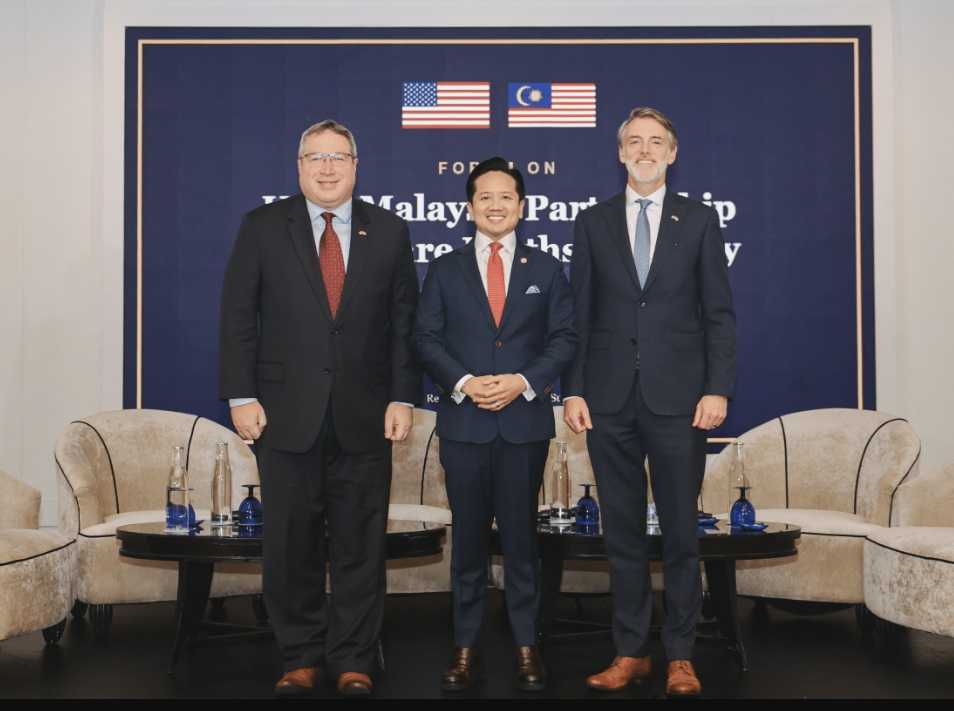
At the forum, Natural Resources and Environmental Sustainability Minister Arthur Joseph Kurup gave the clearest indication that the Anwar Ibrahim administration is not going back on the controversial memorandum it signed with President Donald Trump last year, in which Malaysia not only committed to allow limitless rare earth exports to the US, but also to prioritise American companies in the minerals sector.
“We are ready, willing and uniquely equipped to be the United States’ premier strategic partner in critical minerals and rare earths within the Indo-Pacific region,” Kurup declared.
Rare earths are metals used in the magnets inside electric vehicles, wind turbines, phones and missiles. China dominates their supply and tightened export controls in 2025, sending Western governments looking for alternatives.
Malaysia's deposit of rare earths is estimated at 16.1 million tonnes, with a potential value of about RM970 billion. That is a headline estimate, not a measure of what can be mined: the government has acknowledged that it does not fully account for location and land status.
Malaysia’s recognised reserves are about 1% of the global total, according to Hannam & Partners Research.
Its leverage lies in what it does with the resource. The risk is that Malaysia digs up the rock and ships it out while other countries make the valuable products.
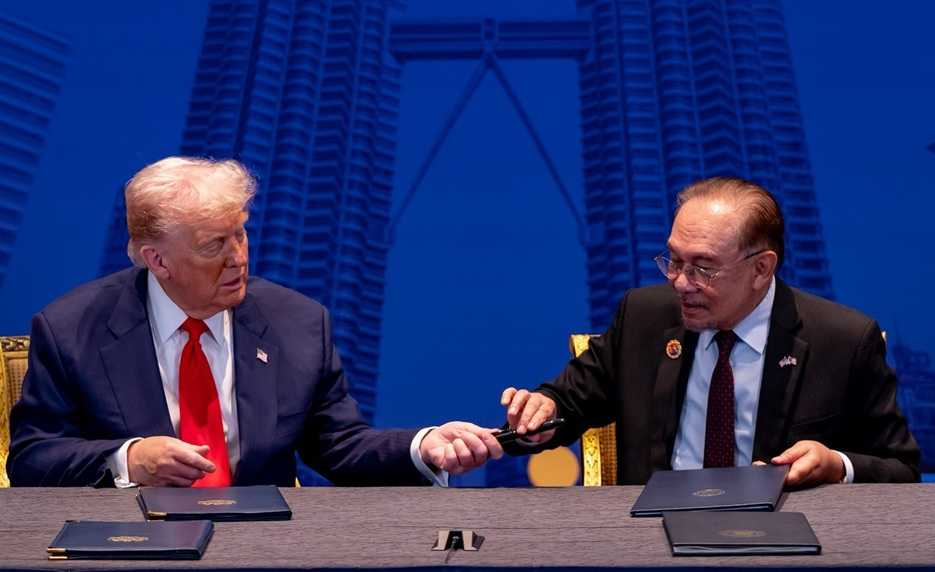
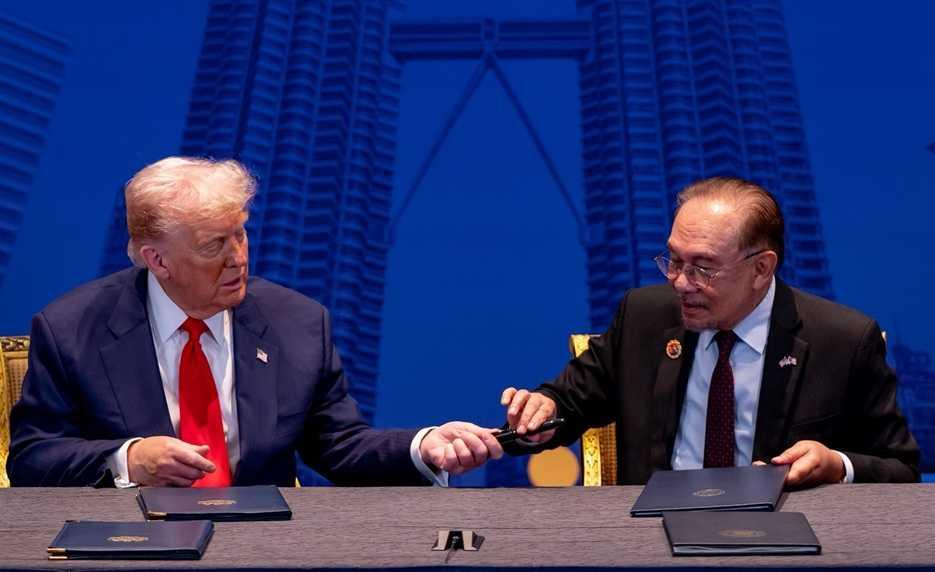
In October 2025, Anwar and Trump signed two documents: a non-binding memorandum on critical minerals, and the Agreement on Reciprocal Trade (ART), which never entered into force thanks to the US Supreme Court's ruling early this year barring the president from unilaterally imposing sweeping global tariffs.
But the minerals memorandum is not affected. It commits Malaysia not to restrict exports of critical minerals and rare earths to the US, to extend licences for expanding producers and to allow unrestricted sales of rare-earth magnets to US firms.
Ministers have maintained that Malaysia's raw rare-earth export moratorium remains in place and that the deal gives the US no exclusive access to local supplies.
Yet on Oct 7, Kurup told Parliament that raw rare earths may be exported for research and processing, subject to commitments to develop value-added activities in Malaysia. He did not disclose how many approvals had been granted.
Malaysia hosts a major rare-earth processing operation, but does not own the entire chain.
Since 2012, Australia’s Lynas has operated a plant in Gebeng, Pahang, to process Australian ore, bringing with it expertise, but also a long-running dispute over radioactive waste.
In March 2026, the government renewed Lynas’s operating licence for ten years. The conditions require radioactive-residue production to cease after five years and the company to contribute 1% of annual gross sales to research and development in Malaysia.
French rare-earth specialist Carester plans to build a rare-earth separation plant in Perak with local miner Malaco Mining Group under a 10-year partnership that includes technology transfer. Some concentrate would still be sent to Carester’s plant in France, supplying another country’s processing chain.
But questions remain: Is the technology transfer about training workers to operate a plant designed elsewhere?
Does Malaysia quantify what knowledge is transferred?
Can Malaysian firms move into higher-value production?
Is the aim just to process ore, or to make the components that manufacturers pay more to buy?
On Oct 13, Reuters reported that Sultan Ibrahim bought a 2.25% stake in Singapore-listed Southern Alliance Mining for S$6.1 million.
The company owns 40% of MCRE Resources, which operates a rare-earth mine in Perak, and is pursuing the acquisition of a company involved in a rare-earth project in Johor, the king’s home state.
The transaction raises a question for every investor: who benefits when public land and mineral rights become valuable private assets?
More importantly, can the public scrutinise the terms?
Without transparency, the public cannot judge whether Malaysia is securing a fair return or granting valuable access on terms shaped by private influence.
Non-radioactive does not mean risk-free
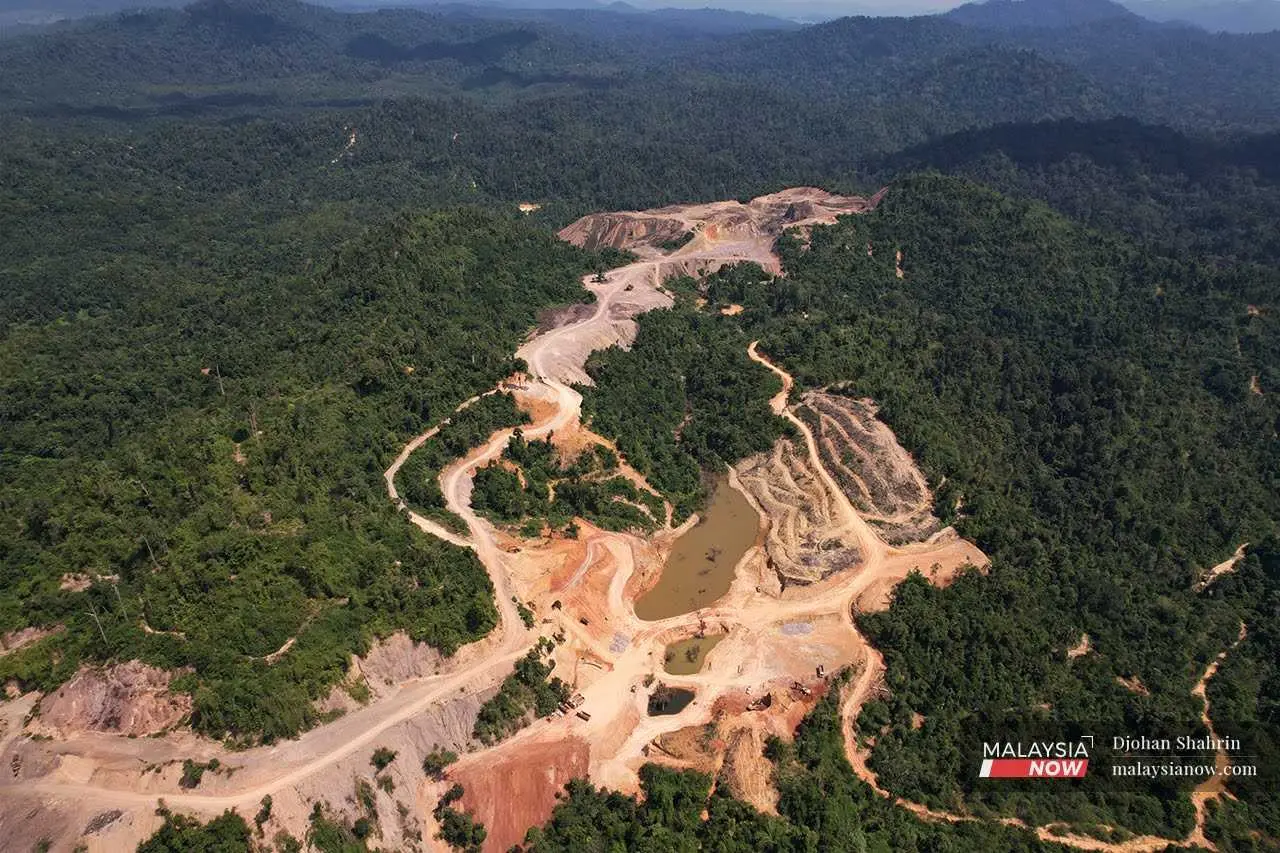
Today’s deposits are described as non-radioactive, but that does not remove the environmental risks of extraction.

The Asian Rare Earth plant in Bukit Merah, Perak, closed in 1992 after a long dispute over radioactive waste.
That mine used in-situ leaching, a method that extracts underground minerals by dissolving them in place without physical excavation of the ore body.
In this method, ammonium sulphate is injected into the ground to release rare earths before pumping the solution back to the surface.
Research has documented risks including nitrogen contamination and soil acidification.
The government has mapped rare-earth presence across more than 24,000 sq km of Peninsular Malaysia, much of it within permanent forest reserves. These are areas where rare earths occur, not proven mineable deposits.
Still, the figures show why mining cannot be separated from forests, water catchments and land use.
“No project should proceed without an independent assessment. The cost of a failed mine must not become a public liability after the profits have been taken,” said one mining industry insider on condition of anonymity.
See more of our coverage in your search results.
Subscribe to our newsletter
To be updated with all the latest news and analyses daily.