Echoing Israel's rejection of Palestinian existence, Myanmar says 'no such thing as Rohingya'
The stance is reiterated even as the Malaysian government helps the brutal regime to gain international acceptance.

Just In
The Myanmar regime, fresh from its recent embrace with Prime Minister Anwar Ibrahim's government, has rejected the use of the term “Rohingya”, a position that echoes Zionist leaders in Israel seeking to erase Palestinian identity.
The Myanmar junta’s objection was made in a response to Channel News Asia (CNA), following a recent documentary by the Singapore-based news outlet on the plight of Rohingya refugees in Malaysia, who have been targeted by xenophobic attacks from vigilante groups, with authorities appearing to make no effort to stop them.
In a statement, the Myanmar embassy in Singapore said the Rohingya, the Muslim ethnic community rendered stateless more than four decades ago in a process that culminated in one of the world’s worst refugee crises, “never existed” as a distinct identity in the country.
“Myanmar categorically rejects the nomenclature that falsely claims the so-called ‘Rohingya’ as an ethnic identity which has never existed in Myanmar. The term ‘Bengali’ has existed in Myanmar as proven by historical official records, including the censuses during the British colonial administration. Therefore, the remarks using such terminology are unacceptable,” it said, as quoted by CNA, repeating a familiar claim that the Rohingya were from Bangladesh rather than an indigenous community with historical roots in Myanmar.
CNA has rejected the argument, saying its use of the term “Rohingya” was a widely accepted journalistic practice including by international organisations.
CNA’s Insight programme on Oct 15 focused on the plight of Rohingya refugees in Malaysia, who have been targeted by rising online hostility fuelled by bots and fake social media accounts.
The episode was aired just a week after Anwar rolled out the red carpet for Min Aung Hlaing, the Myanmar strongman wanted for war crimes by the International Criminal Court, whose regime has intensified airstrikes on Muslim townships in Arakan State in recent weeks, killing scores of civilians.
For decades, Myanmar authorities and nationalist movements led by extremist Buddhist monks have systematically portrayed the Rohingya as foreigners who do not belong in the country. They have repeatedly been described as illegal Bengali immigrants despite longstanding evidence of their presence in Arakan, now known as Rakhine State.
Myanmar authorities helped create the perception that they were not a native community with legitimate rights, but an alien population whose presence posed a threat to the country.
The rejection of Rohingya identity is reminiscent of the language used by Zionist leaders, who deny the existence of a distinct Palestinian people.
In 1969, then Israeli prime minister Golda Meir famously declared that there was no such thing as a Palestinian people.
In 2023, Israel’s Finance Minister Bezalel Smotrich said the notion of a Palestinian people was “artificial”, while more recently Israel’s Chief Rabbi, David Yosef, stated that Palestinians are not a people and do not have rights to the land.
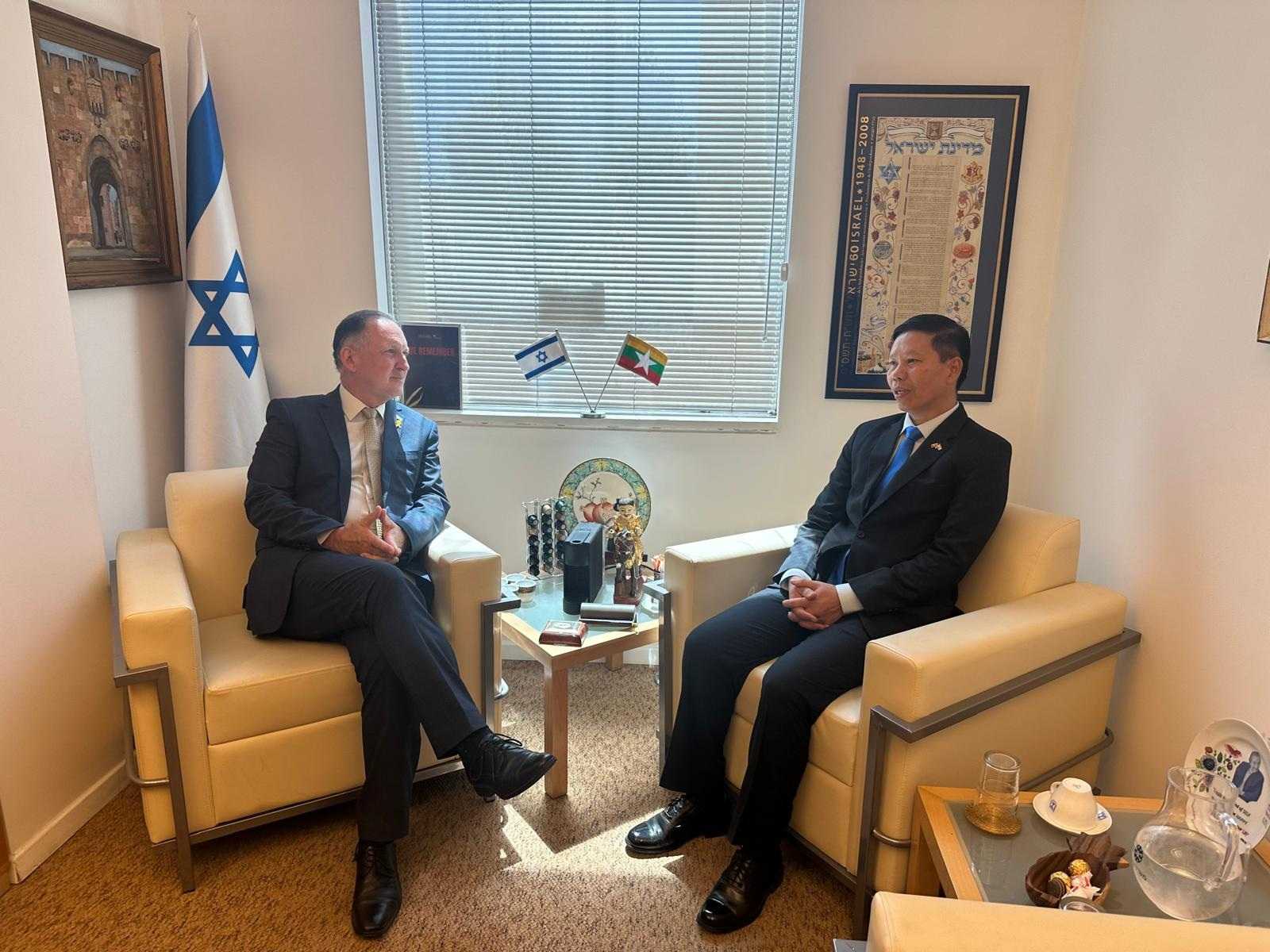
Myanmar’s long-rooted ethnic cleansing of its Rohingya minority was not only inspired by Israel, but also found support from the Zionist regime.
The Myanmar junta is one of Israel’s strongest allies in the region. After all, Myanmar (formerly Burma) was the first country in Asia to formally establish diplomatic ties with Israel in July 1953.
Since then, their political and military ties have expanded, with both governments leaning on each other amid international condemnation over their own genocidal campaigns.
Israel not only armed the “Tatmadaw” Burmese military forces responsible for the genocide of the Muslim minority in the state of Rakhine, but also signed a bilateral agreement to literally rewrite history, determining how each country is represented in the other’s books and literature.
See more of our coverage in your search results.
Subscribe to our newsletter
To be updated with all the latest news and analyses daily.