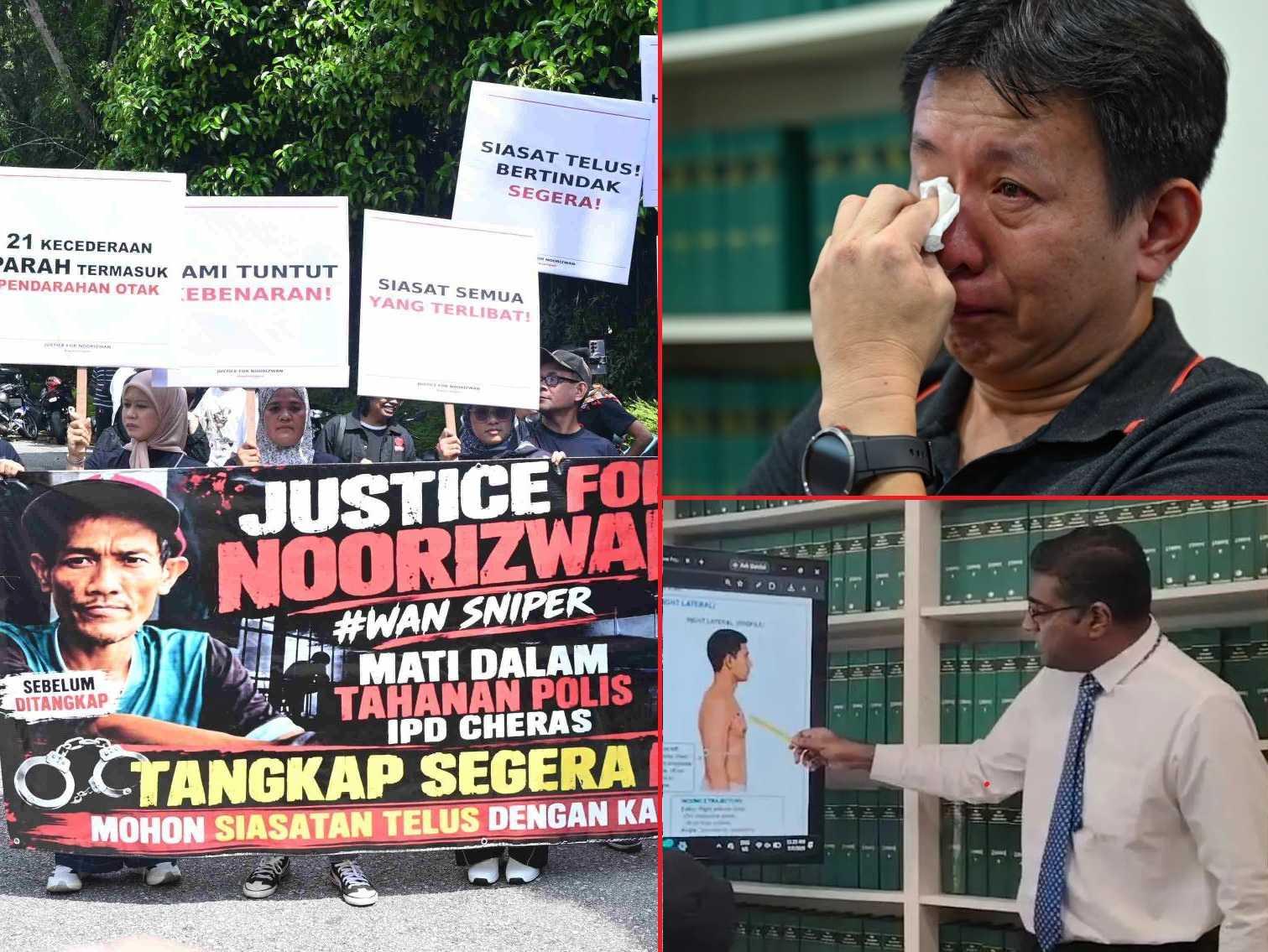
Lawyers release forensic report that ‘leaves no room for speculation’ over Noorizwan’s death in police custody
The report details 46 external injuries to the head and concludes they were inflicted by one or more persons.

Just In
Lawyers for the family of Noorizwan Zulkefly, the 42-year-old whose death in the custody of Cheras police last month sparked public outrage, said a full post-mortem report from the government’s forensic pathologist “leaves no room for speculation” over the cause of his injuries and death.
The report from Hospital Universiti Kebangsaan Malaysia (HUKM) showed that Noorizwan suffered head injuries caused by blunt-force trauma, and that his injuries were inflicted by one or more persons.
Surendran said it provided definitive scientific evidence of how Noorizwan died.
“The answer is in black and white. The answer is science,” he told a press conference in called by rights group Lawyers for Liberty in Petaling Jaya today.
The report detailed 46 injuries across Noorizwan’s body, including his head and other parts of his body.
It said the pattern of injuries was consistent with blunt-force trauma, adding that skin haemorrhages, scalp haematoma and subarachnoid haemorrhage were sustained within the three days preceding his death.
“In simple words, he was beaten to death. And the head injury caused the death,” Surendran said.
Surendran said the injuries were more severe than those suffered by A Kugan, whose death in custody in 2009 shocked the nation and ended with the court holding the police responsible and awarding damages to his family.
“According to the pathologist, these injuries were caused by one or more persons. Not self-inflicted. Not him falling. Not any other cause. But according to the pathologist, inflicted by another person or persons,” he said.
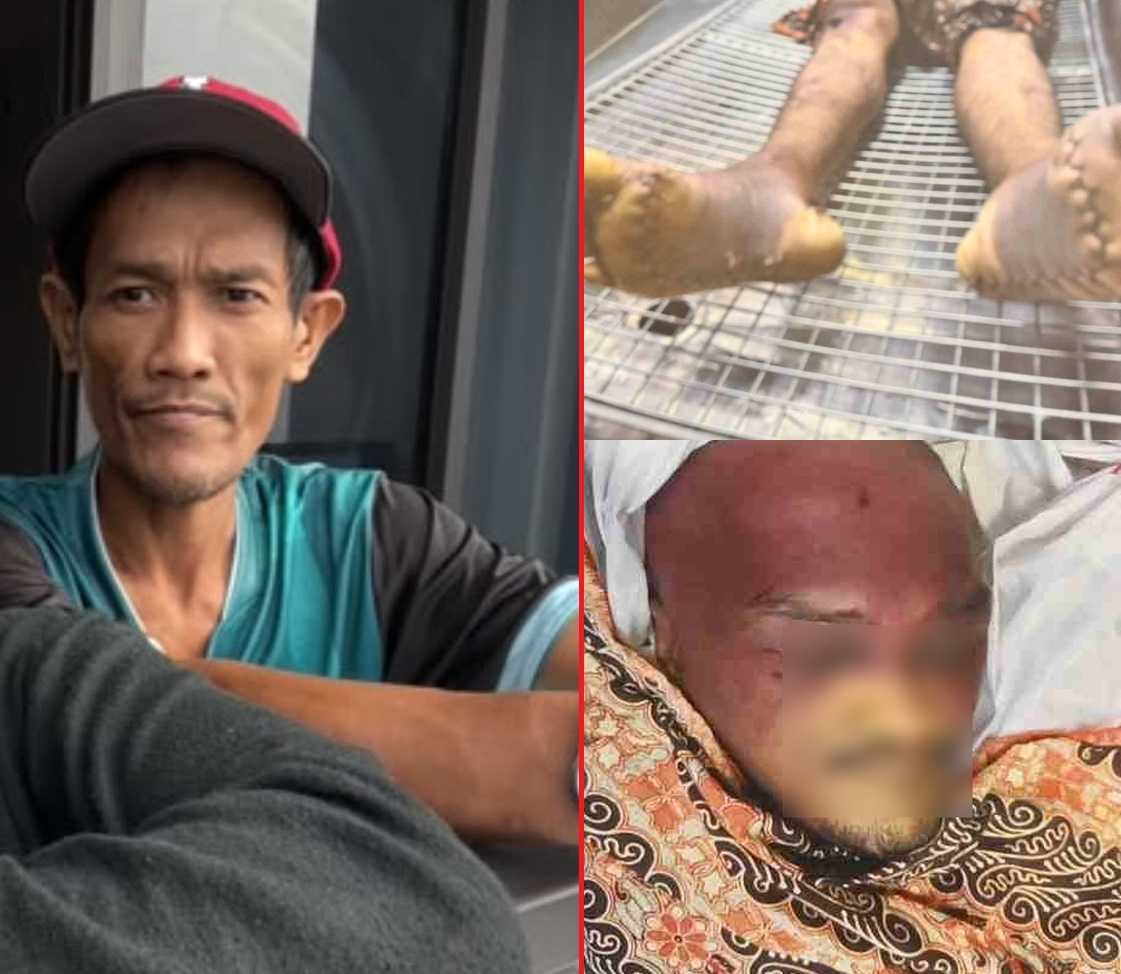
Noorizwan was arrested and brought to the Cheras police headquarters on Sept 20, where he spent the next 10 days in the lock-up. The family said they were not informed of his arrest or whereabouts while he was held in custody, and were only contacted at about 8pm on Oct 1, informing them that Noorizwan had died at 1.52am the same day, some 18 hours earlier, after he was brought to HUKM.
A forensic examination later revealed that Noorizwan had suffered extensive injuries to his body and head, as well as bruising and torn tissue on his back, chest, arms, legs and the soles of his feet, and at least six broken ribs.
The controversy intensified after Kuala Lumpur police chief Fadil Marsus said police procedures had been followed and described the case as a sudden death, while urging the public not to speculate.
Fadil also fuelled public outrage by attempting to play down the injuries found on Noorizwan’s body, saying it was normal for “minor injuries on a drug addict” to appear worse after death.
Police have meanwhile launched a criminal investigation into three lawyers representing Noorizwan’s family, accusing them of pressuring HUKM into revealing autopsy photographs.
'My brother was killed'
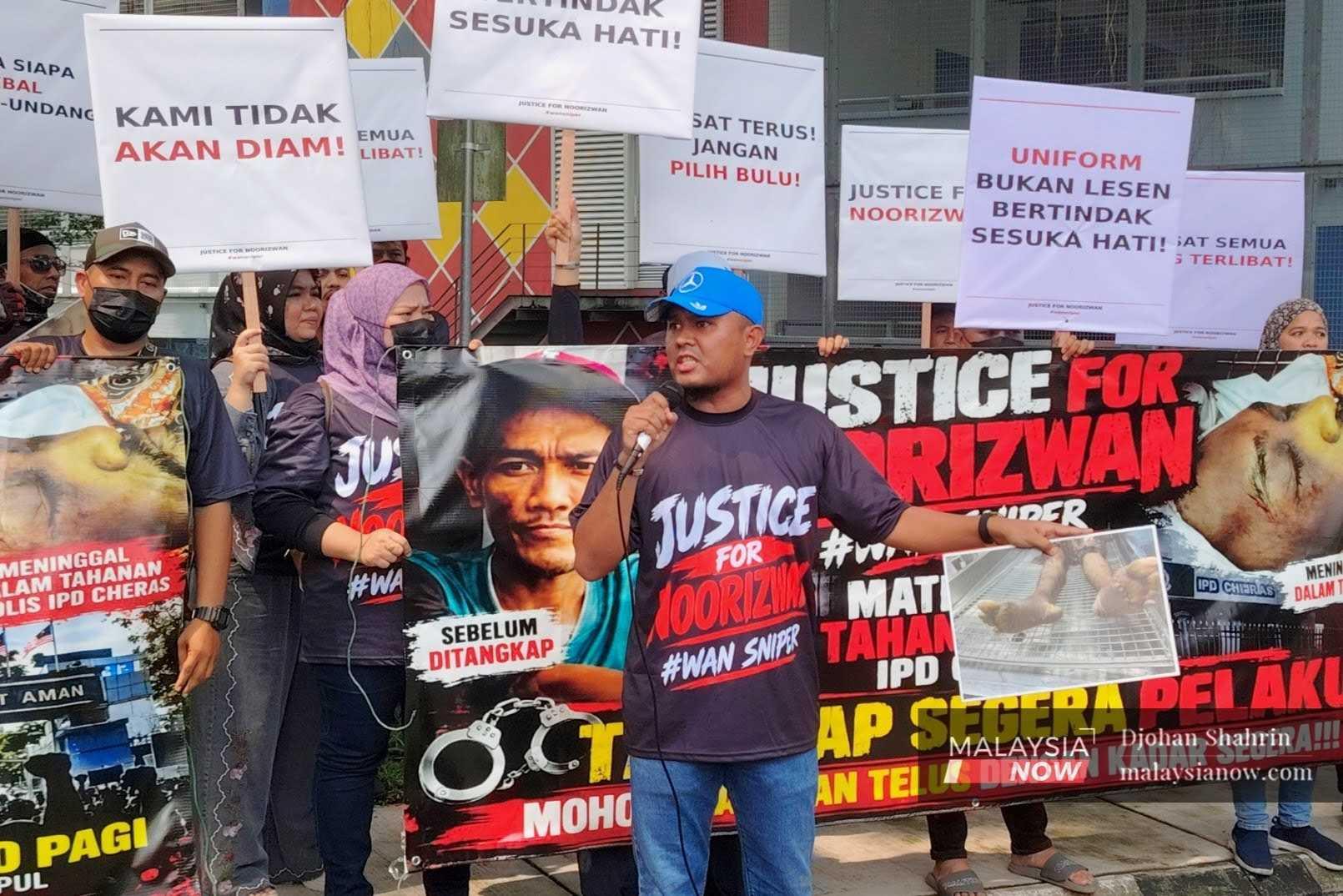
At the press conference today, Noorizwan’s brother Nooranis slammed authorities including the home ministry and the Attorney-General’s Chambers for their silence despite the forensic findings.
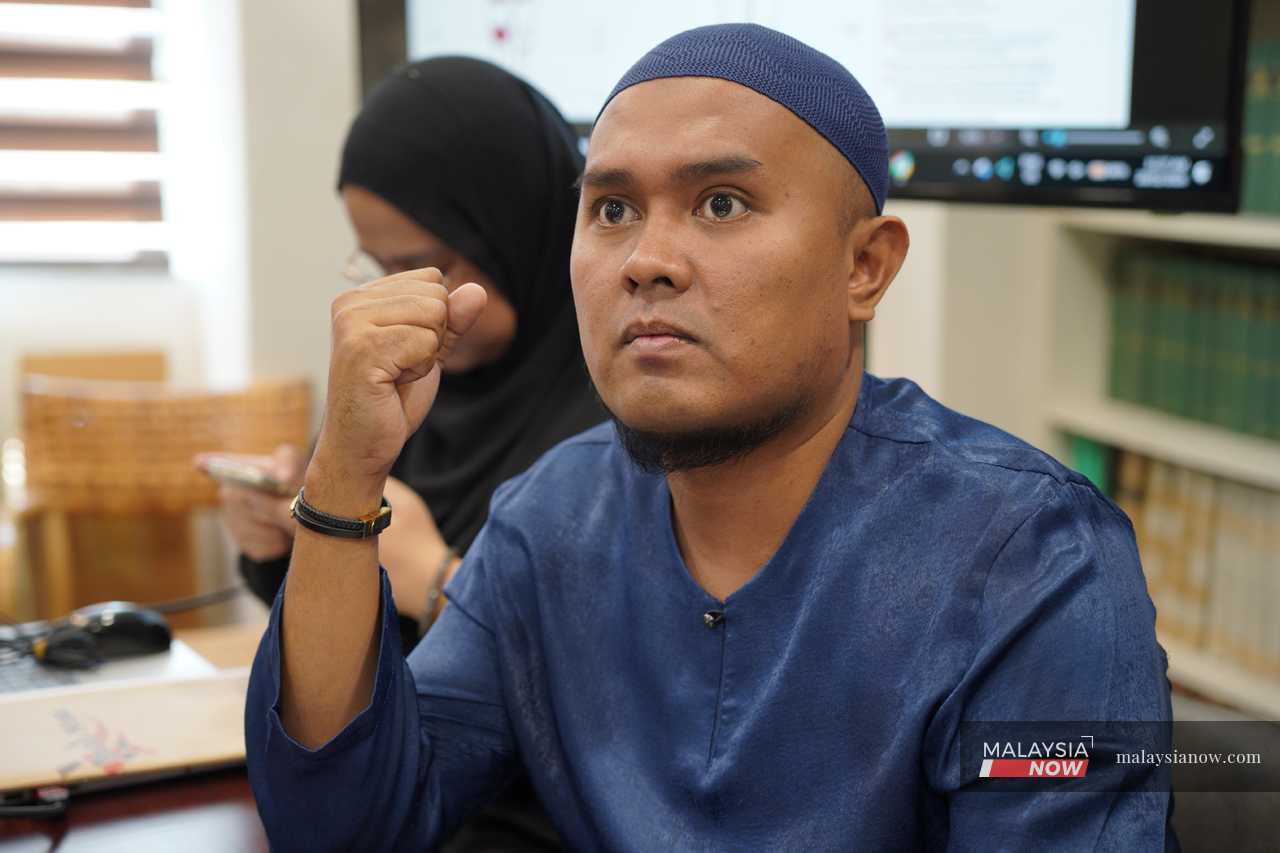
“Today, it has been 50 days. There have been no arrests, no prosecutions against the 10 perpetrators who killed my brother,” he said.
“This is not a normal injury. There were 46 injuries. This was not bullying at school or at the workplace. He was tortured in the police station that we trusted.
“My brother was not being investigated. My brother was killed,” said Nooranis, who repeated calls for a murder investigation under Section 302 of the Penal Code.
The nine-page report dated Oct 2, 2026 and signed off by HUKM forensic pathologist Dr Faridah Mohd Nor documents 46 external injuries to the head, face, torso, arms and legs, with internal findings including brain haemorrhage, rib fractures and bleeding in the abdomen.
The report described extensive bruising to the head, including a 22cm by 7cm contusion involving the forehead, a 13cm by 10cm contusion across both parietal regions, and a 13cm by 11.5cm bruise on the right temporal area.
It also documented fractures to the right third rib and the left third and fourth ribs, as well as a 15cm by 13cm contusion to the left mesentery in the abdomen.
Other injuries included bruising to both shoulders, upper back, arms, elbows, wrists, hands, thighs, knees, shins, ankles and feet.
“There were no significant natural diseases found in his body that could have caused or contributed to his death at that particular moment in time,” the report concluded. “The injuries were consistent with infliction by one and/or more persons.”
Meanwhile, Surendran said that while he could not speculate on what transpired in the lock-up, the findings left him wondering about the suffering Noorizwan endured in his final days.
“What was Noorizwan’s condition during the last days of his life? What pain did Noorizwan experience during the last days of his life? He was alone.”
He said the forensic findings should prompt a serious murder investigation under Section 203 of the Penal Code.
“It’s very simple. The offence of murder in Malaysia means if you do something dangerous to someone that common sense tells you that he may die, that is murder. Whether you intended, or you didn’t intend, or were just casually beating the person, if the assault is severe enough to cause death, it is classified as the crime of murder,” he added.
See more of our coverage in your search results.
Subscribe to our newsletter
To be updated with all the latest news and analyses daily.