
Trapped in Malaysia: Migrant workers trafficked, unpaid and passed between companies
Workers describe how they were forced into an undocumented labour pipeline across Malaysia, moved between companies as unpaid labour with their passports confiscated.
Just In
At 4am last week, Ramjaan woke up for the third time that night.
His phone buzzed with messages from his wife in Uttar Pradesh, India. He stared at the screen, his thumb hovering over it, then put the phone down. He has no answer to give her: when he will return home, or whether he will ever return at all.
The 37-year-old is in hiding in Malaysia after escaping what he describes as exploitation at a logistics company in Johor.
Ramjaan does not speak English or Malay. His passport, he says, was confiscated by an Indian trafficker named Isha on the night of Jan 23, 2026, the same day he arrived in Malaysia.
Without language skills or documents, he says he cannot ask for help or prove his identity.
“I am scared what if I am arrested as an illegal migrant. How will I explain my situation in Hindi?” says Ramjaan over a call to MalaysiaNow.
With pain in his voice, Ramjaan says urgently: “I want to go home. I am frustrated.”
His story is not an isolated one.
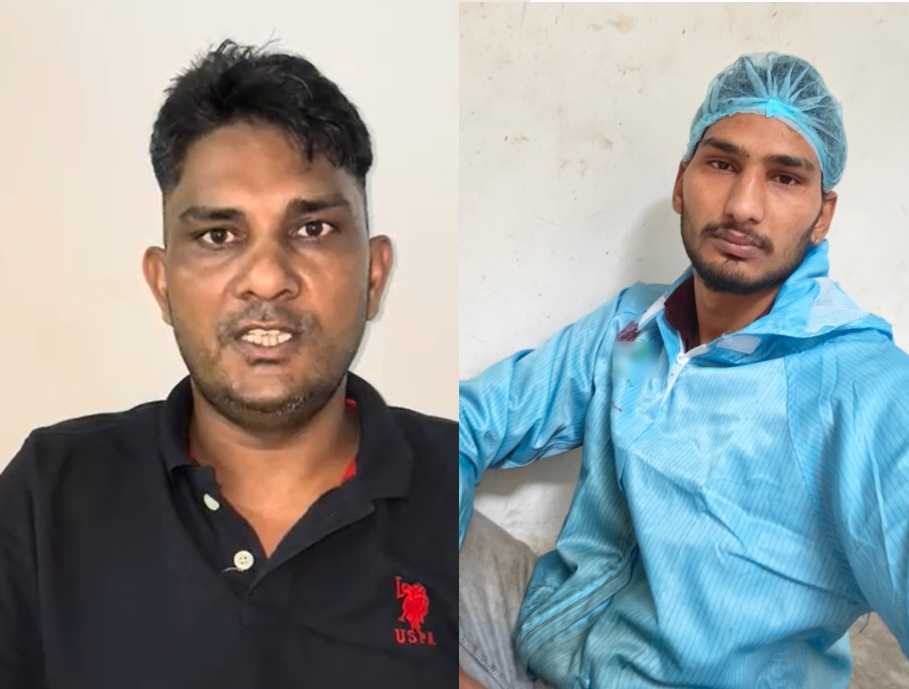
Ramjaan was one of three men from Muzaffarnagar, Uttar Pradesh, who were trafficked to Kuala Lumpur this year. Along with Danis and Babbar, he says he was recruited by the same agent, Isha, who offered work permits, Malaysian residency and a monthly income of RM2,127.33 (about 50,000 Indian rupees) for packing nuts.
Instead, they were forced into an undocumented labour pipeline across Malaysia’s logistics and agriculture sectors, “carrying 30-50kg heavy boxes without protective gear”.
“We endured chronic back pain and survived on one meal a day while working up to 17-hour shifts. We never received any wages despite demanding them, and instead were transferred between employers without our consent,” said 29-year-old Danis, who was trafficked to Kuala Lumpur on Jan 23, 2026.
He was trafficked for bonded labour twice – once in India during Covid-19 to work in a brick kiln and now in Malaysia.
Months later, only one of them has returned home.
Fake passport, recorded ‘consent’
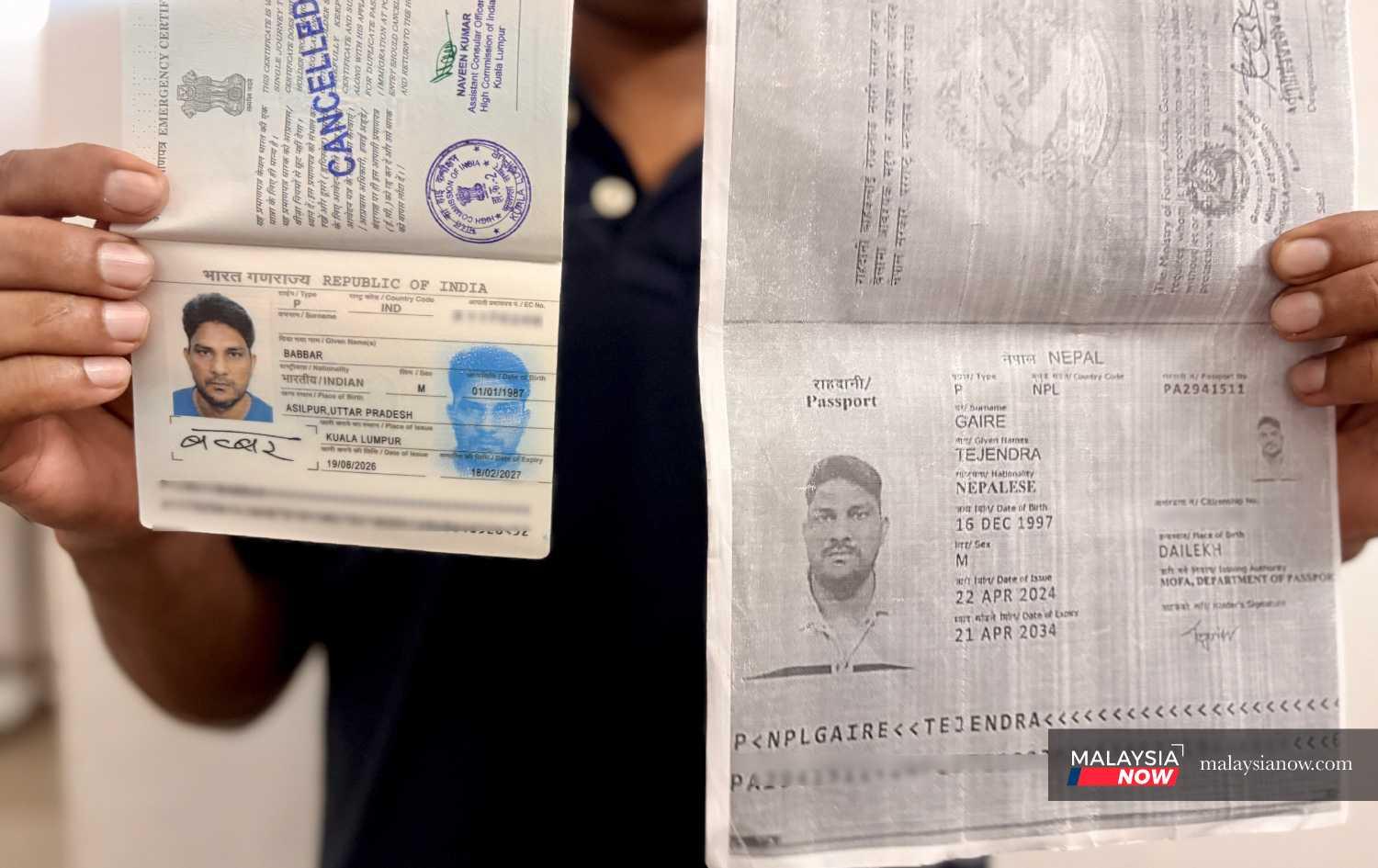
On Sept 1, Babbar (37) made it back home to India, but he carried trauma, RM6,124 (150,000 Indian rupees) in debt and a forged Nepali passport. Babbar’s ordeal began in March 2026, when he was trafficked to Malaysia.
In five months, he was “sold three times” to large companies without his consent: an express delivery company used by giant online shopping platforms, a fruit wholesale company, and a company involved in the assembly and maintenance of commercial vehicles.
Babbar says that before selling him to the last company, his recruiter at the fruit warehouse handed him a forged Nepali passport.
“He told me Indians are barred from working there, that’s why a fake passport is needed,” Babbar recalls.
This claim was also corroborated by Danis, who was likewise given a forged Nepali passport before being placed at the same facility.
“We feel helpless as everyone is colluded in the system: companies, traffickers, supervisors, human resources, etc,” says Danis.
The workers also describe how traffickers manufacture consent to systematically undermine rescue efforts.
“Whenever workers contact families or authorities to seek help, the middlemen torture us and force us to record scripted videos claiming our workplace and living conditions are safe,” says Babbar.
Nirmal Gorana, convener of the National Campaign Committee for the Eradication of Bonded Labour in India, says such recordings can undermine investigations “because authorities may believe workers are safe when they are not”.
When contacted, one of the companies denied the claims, stating that it has no record of employing foreign nationals, while confirming it cooperated fully with authorities including the High Commission of India and the Labour Office.
“The allegations of illegal employment, salary theft, passport confiscation and trafficking-related labour practices, insofar as they are directed at the company, are therefore without foundation,” it said, adding that government agencies “are satisfied with the company’s explanation and the documents provided”.
Systematic exploitation
MalaysiaNow’s investigation uncovered evidence that corporations in Malaysia recruit trafficked undocumented labour from India, Bangladesh, Nepal and Myanmar through various traffickers acting as recruiters.
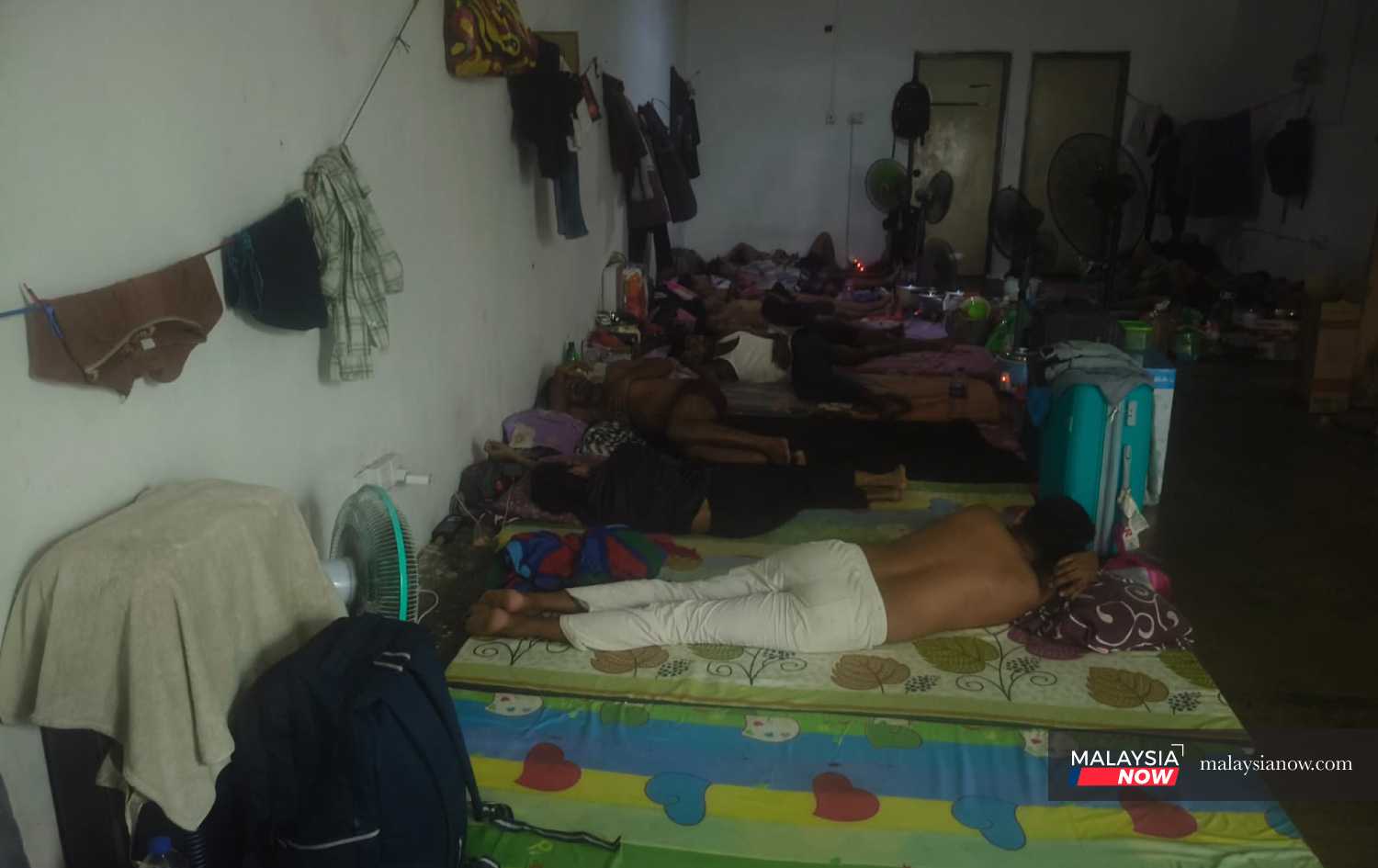
According to the workers interviewed, they were constantly transported between companies as unpaid labour after their passports were confiscated.
Babbar, Ramjaan and Danis were moved between three to five companies throughout the supply chain and given forged passports, particularly after demanding wages or their passports to return to India.
The pattern also exposes systemic exploitation across the logistics, agriculture and automotive sectors, with companies evading accountability as workers are made to work without pay and have little freedom to leave or ask for help.
Government inaction
India’s Ministry of External Affairs launched the MADAD portal specifically to support Indian migrant workers abroad. However, when Gorana and Babbar’s family requested assistance with a return ticket for Babbar, it was denied despite assurances.
The ILO Protocol of 2014 to the Forced Labour Convention of 1930 (P029) requires ratifying countries to take steps to protect workers, particularly migrant workers, from fraudulent and abusive recruitment. The convention stipulates the elimination of forced labour, the protection of victims and access to justice.
Malaysia continues to face scrutiny over its treatment of migrant workers. Critics argue that the sponsorship system ties a worker’s legal status to their employer. If the employer abuses them, leaving or complaining about an abusive workplace can put the person at risk of becoming undocumented or an illegal migrant.
Earlier this year, Bloomberg published its damning findings into a Bangladeshi-owned company that was given free rein to recruit millions of migrant workers, many of whom lost their entire life savings to pay “syndicate fees” in exchange for jobs that never existed.
It recalled the fate of Bangladeshi farmer Shofiqul Islam, who borrowed US$4,400 to pay recruitment fees for a Malaysian construction job, hoping to support his children. Upon arrival, his employer, Petrazehra Bhd, allegedly abandoned him. Despite having no revenue for two years, the company was approved to recruit 1,500 Bangladeshis.
Jobless, burdened with debt at home and an illegal in Malaysia, Shofiqul fell ill and died in early 2024, his body flown back to his family, who were still struggling to repay the recruitment fees.
Meanwhile, in Uttar Pradesh, India, alleged trafficker Isha and his associates, Nadeem, Talib, Tayyab and Dilshad, remain at large despite police complaints, including a First Information Report (FIR), being lodged against them at police stations in Meerut and Muzaffarnagar.
Several victims have begun posting their ordeal online to expose the group and warn others.
Gorana, the labour activist, says that his organisation is currently in touch with over 20 Indian workers trafficked for bonded labour by Isha and various other recruiters into Malaysia’s supply chain, and that they are in desperate need of rescue and support.
“The purpose is not only to bring workers home and arrest the traffickers but also to hold those companies accountable for exploitation,” says Gorana.
Pari Saikia is an award-winning independent human trafficking journalist from India.
See more of our coverage in your search results.
Subscribe to our newsletter
To be updated with all the latest news and analyses daily.


Most Read
No articles found.