Malay support remains elusive for Anwar as he trails Khairy, Muhyiddin in latest poll
The findings come amid new political alignments following major splits in both the government and opposition blocs.
Just In
Malay support remains elusive for Anwar Ibrahim more than three years after he came to power through a fragile coalition government dominated by DAP, with the prime minister ranking third in approval ratings among the politically critical electorate, behind former Umno Youth chief Khairy Jamaluddin and Bersatu leader Muhyiddin Yassin, a new poll shows.
However, support from non-Malays allowed the Pakatan Harapan chairman to scrape through the charts, with a 52% overall approval rating, beating other party leaders, according to the survey carried out by pollster Merdeka Center.
The poll, involving 1,209 eligible voters in 14 states whose ethnic composition reflects the country's population, was conducted by phone between March 12 and April 9 this year, a period which saw both the opposition and government experiencing internal rifts that later led to the formation of breakaway parties.
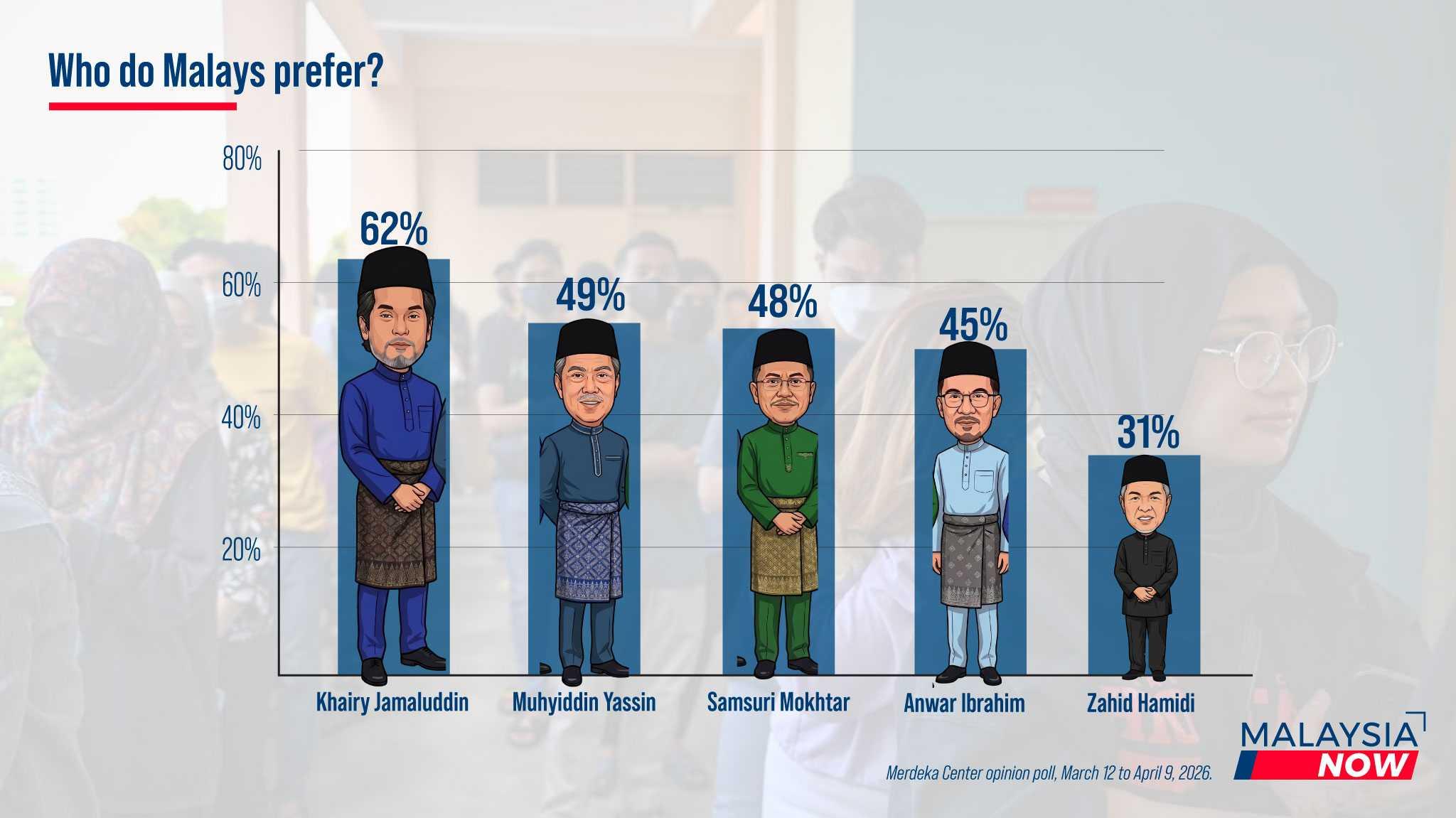
It found that while Anwar retains 59% support from non-Malay voters – who in almost every election have been the backbone of PH's vote bank – only 45% of Malays say they are satisfied with his performance.
This compares to a 62% approval rating for Khairy, followed by 49% for Muhyiddin, Perikatan Nasional chairman Ahmad Samsuri Mokhtar (48%), and PAS president Abdul Hadi Awang (41%).
Meanwhile, Malays appear to have overwhelmingly rejected Umno president Ahmad Zahid Hamidi for any potential rise as prime minister, indicating that his party's newfound confidence in winning future elections could be hampered by lingering dissatisfaction with its top leadership since the downfall of former leader Najib Razak.
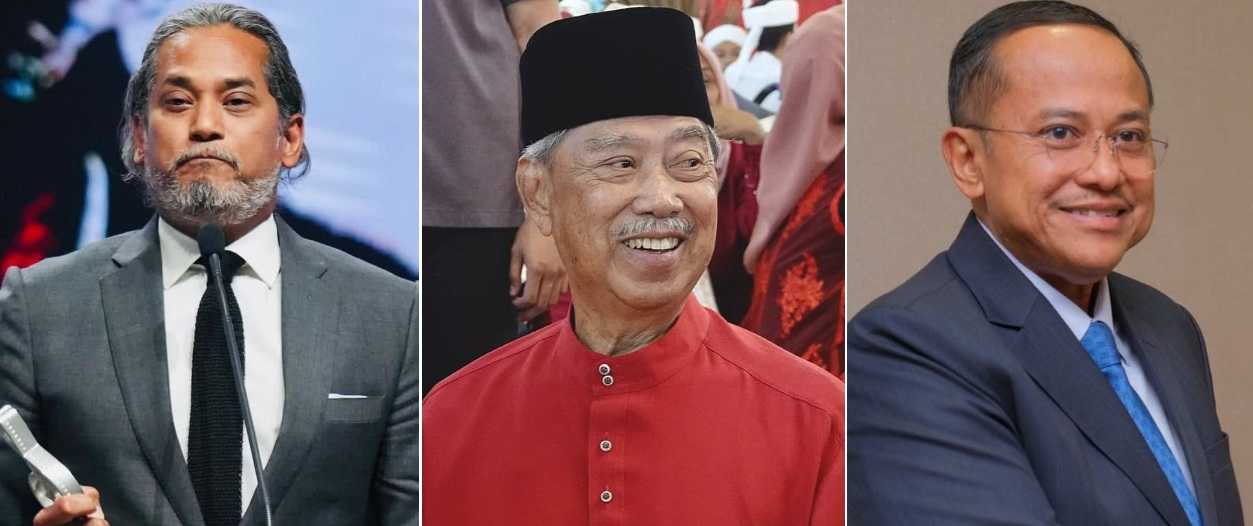
The Malay endorsement for Khairy – the only politician without a parliamentary seat in the list – may be attributed to his three-year rebranding exercise through appearances on podcasts and prime time radio shows, where he has frequently taken pains to distance himself from his political past.
Still, non-Malays are not convinced by the once rising star in Umno who rebuilt his political fortune on the back of defiance towards party leaders, with only 31% approving of him and 44% saying they are not satisfied with his performance.
Still, that is better than non-Malays' rejection of other Malay leaders: Hadi (81%), Muhyiddin (80%), and Zahid (71%).
Meanwhile, former PKR deputy president Rafizi Ramli, with 31% approval from non-Malays, trails far behind his former boss, who still enjoys 59% non-Malay support despite recent trends in Chinese support for PH as seen in the Sabah elections.
Non-Malays also seem largely unsure on newcomer Samsuri, who received a 6% endorsement, 39% rejection, leaving 55% still undecided.
Despite taking the lead, Anwar's overall rating remains lower than in the last polls, but is much better than last year, when only 43% approved of his leadership.
The support, however, does not translate into endorsement of his government's economic management, with more than half (51%) of respondents saying they are not satisfied.
Around the same number (50%) also feel the country is heading in the wrong direction, with the majority citing economic concerns.
Despite major differences in their choice of leaders, the polls find common agreement across ethnicities on some issues, such as limiting the prime minister's tenure to two terms, changes in the attorney-general's powers, and mayoral elections for Kuala Lumpur.
The latest findings only confirm what analysts have said all along: that Anwar's government still struggles for Malay support, as seen in the 2022 general election.
In that election, PH won 82 parliamentary seats, mostly in constituencies with large numbers of non-Malay voters, while the Malay vote was split between PN and BN.
PN, meanwhile, won 74 seats, mostly defeating Umno strongholds.
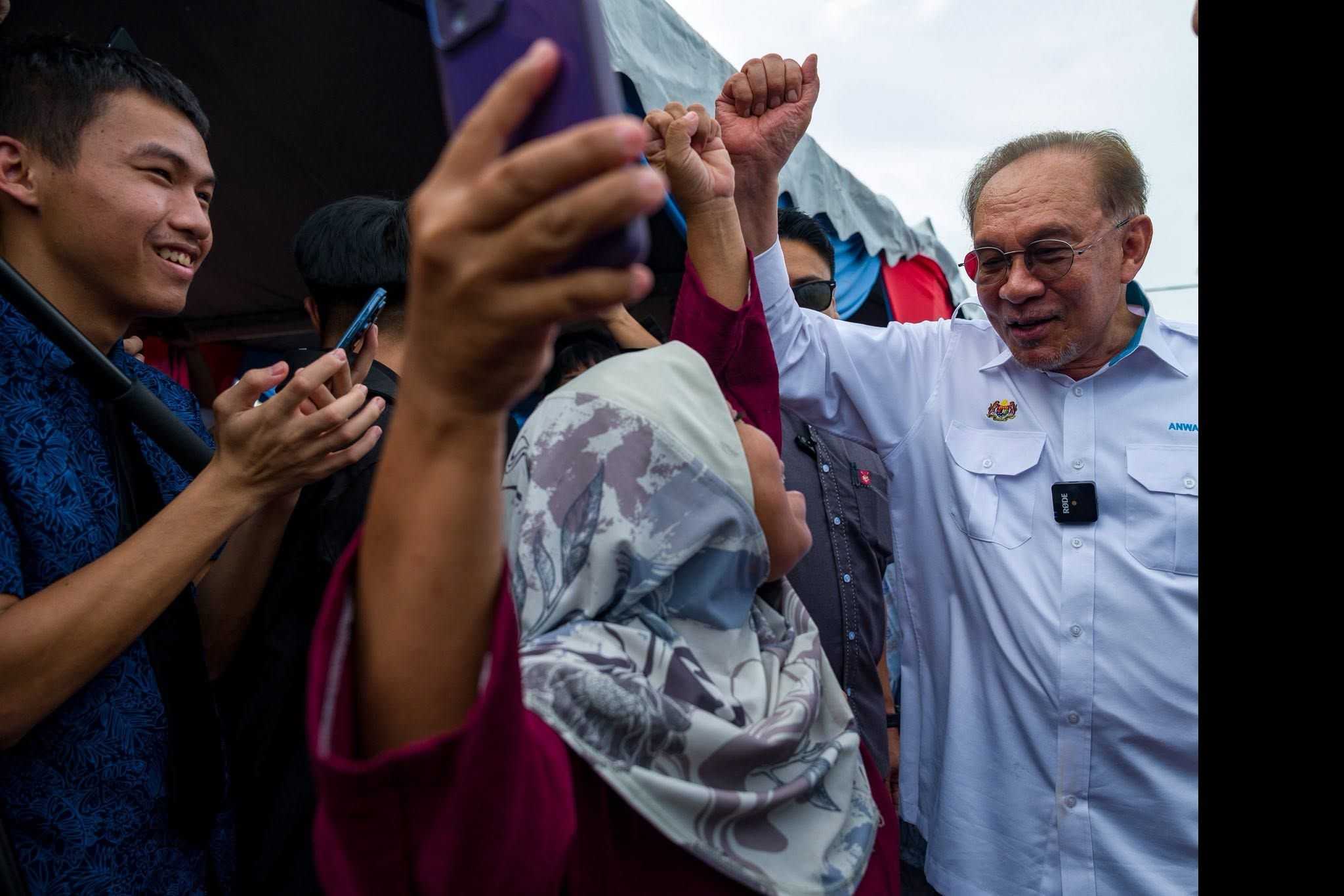
A similar pattern was seen in the six state elections the following year, where the Malay-majority seats went overwhelmingly to PN while the non-Malay seats provided solid support for PH.
Anwar's fate was best summed up by veteran politician Tengku Razaleigh Hamzah, who said the PKR leader would continue to suffer a deficit in Malay support because the base of his PH coalition is the non-Malays.
"It (PH) is essentially Chinese, so how can the Malays rely on a leadership whose interests are not those of the Malays?" Razaleigh, better known as Ku Li, told MalaysiaNow in an interview two years ago.
"Unless Anwar has a Malay base, the Malays will not support the PH that he leads."
See more of our coverage in your search results.
Subscribe to our newsletter
To be updated with all the latest news and analyses daily.