Family of Malaysian prisoner reveals shocking acts of threats, deception before execution in Singapore
Sangkari Pranthaman writes what Pannir told family members on eve of his execution.
Just In
[Editor's note: The Singapore government has issued a directive to MalaysiaNow to insert "correction" passages in this article, by invoking its anti-fake news law called Protection from Online Falsehoods and Manipulation Act, or Pofma. Our response is attached at the end of this article.]
We refer to the execution of Pannir Selvam Pranthaman, a Malaysian citizen, in Singapore on Oct 8, exactly one month ago.
The execution was carried out in a haste, and was against justice and the rule of law.
Firstly, the Misuse of Drugs Act (MDA) in Singapore is fundamentally flawed and inherently prejudiced. Its structure operates as a legal trap rather than a fair system of justice - rooted in unfairness and racial bias, and designed to condemn rather than protect.
Secondly, Pannir Selvam was unlawfully denied a "certificate of substantive assistance" by the Singapore government which would have resulted in commutation of sentence. He had cooperated with authorities and provided information that led to the arrest of Zamri Tahir, who was apprehended.
His assistance clearly demonstrated proactive cooperation, yet the authorities denied him the substantive assistance certificate intended to reward such cooperation, defeating the purpose of the law itself.
Thirdly, it was also proven that prison authorities had forwarded Pannir’s confidential correspondence with his lawyer - a shocking and unlawful breach of privilege. Although the case was dismissed with only a S$10 fine imposed on the prison, the violation of his legal confidentiality remains undeniable and highly prejudicial to him.
Fourthly, in its statement on Pannir’s execution on Oct 8, Singapore’s Central Narcotics Bureau (CNB) claimed it merely facilitated a request from Malaysian police to interview Pannir days before his execution, with a CNB officer present, and asserted that no new information was provided. However, this narrative is misleading.
Neither Pannir, his family, nor his counsel were notified of this crucial interview. It was done surreptitiously and in secret.
No standard operating procedures were in place, and the process was carried out under the direction of the Ministry of Home Affairs without any transparency.
'Singapore narcotics agent in PDRM uniform'
On the eve of his execution, Pannir shared with his family what really transpired during the interview.
During the interview, a CNB officer Kannan Radhamani wore a Malaysian police (PDRM) uniform and deliberately hid his true identity as a CNB officer. His serious deceptive conduct - posing as a Malaysian officer - created an environment of intimidation and confusion, undermining the fairness of the process.
Pannir only discovered Kannan’s real identity subsequently, as it was mentioned in court affidavit filed in his stay application.
If CNB’s involvement was legitimate and transparent, why was Pannir’s counsel excluded, and why were officer identities concealed? Such omissions reveal procedural impropriety, duplicity and bad faith.
This conduct by CNB and minister K Shanmugam mirrors coercive and manipulative tactics - exploiting vulnerable individuals instead of upholding justice.
The law, in its current form and practice, serves not as a safeguard of rights but as a tool to target the powerless and destroy them.
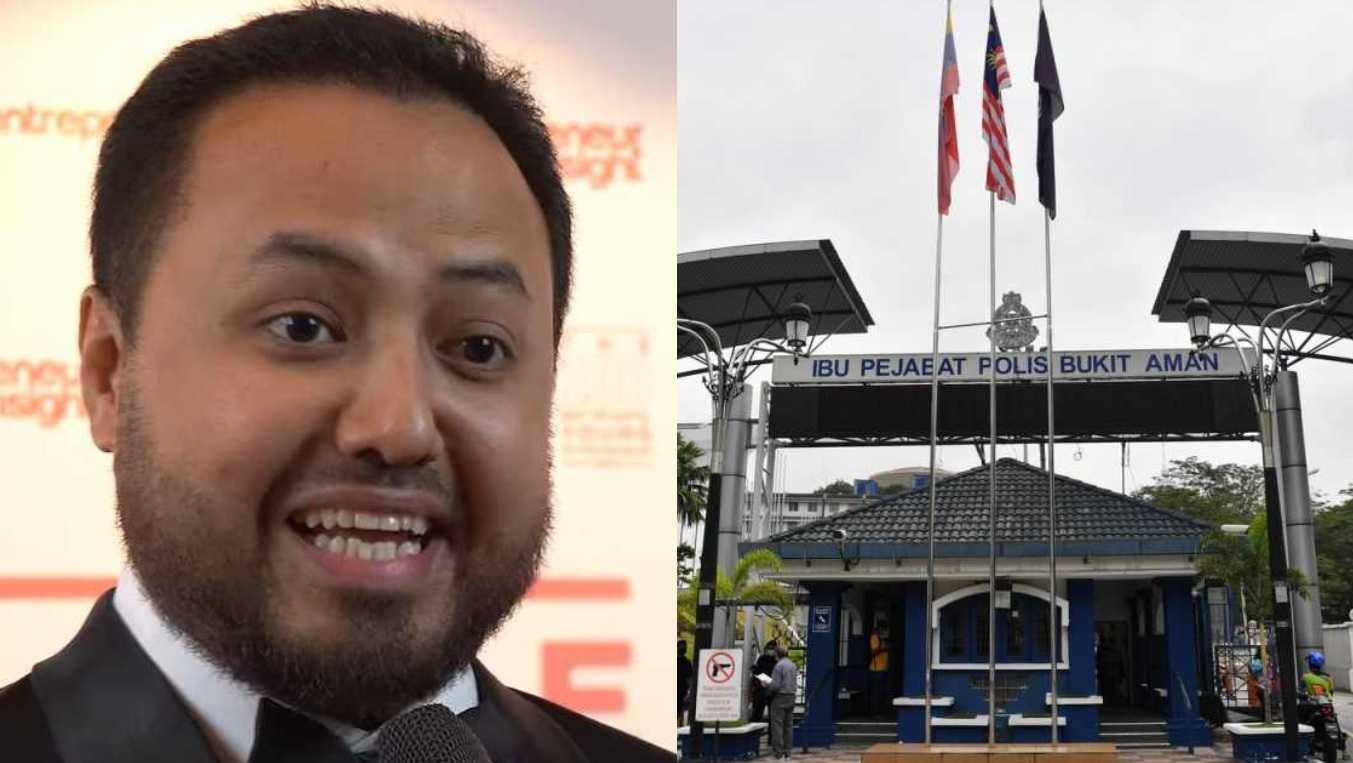
Fifthly, the conduct of Malaysian police throughout was unacceptable. Pannir disclosed to us that one ASP Suresh Elumalai from Bukit Aman recorded his statement.
This police officer then pressured Pannir to place his signature on blank sheets of paper. When Pannir refused to do so, ASP Suresh persisted, pressuring him to sign the blank document despite Pannir’s reluctance. Why was this unlawful procedure carried out by Malaysian police? What was the purpose of the signatures on blank papers?
Sixthly, Singapore prison officers Loh Guo Wei and Cheong Wee Ling attempted to manipulate the family into signing a form stating that all of Pannir’s belongings had been handed over.
When questioned, the Changi Prison Service officer admitted that some of Pannir’s papers were being held "for screening". The family was not informed of this beforehand. It was only after carefully reviewing and counting the documents that we realised certain items were missing.
Mystery of missing documents
On Oct 8, the morning of the execution, for about 45 minutes, Pannir’s sister Sangkari and other siblings insisted to the officers that the missing documents be returned.
The prison officers refused to return some of Pannir’s belongings, and the photographs provided were of very poor quality - blurred and incomplete, with Pannir’s personal items missing. Officer Loh Guo Wei is also acted improperly by pressuring family to sign even before returning Pannir’s body and his iteams. Where are the missing pages?
Did they contain final disclosures from Pannir implicating both Singapore and Malaysian police in serious unlawful and irregular acts?
Even if Pannir has been executed, our family still deserves answers to the above questions, which reveal serious irregularities, unlawful actions, and possible conspiratorial conduct by both the Singaporean and Malaysian authorities.
As this matter relates to public interest, the public of both countries are entitled to answers as well.
Sangkari Pranthaman is sister of the late Pannir Selvam Pranthaman.
-----
Statement by MalaysiaNow on Singapore government's "correction" notice
Today, the government of Singapore issued a lengthy notice to MalaysiaNow under a draconian censorship law euphemistically called the Protection from Online Falsehoods and Manipulation Act, or Pofma.
The notice concerns an article published by MalaysiaNow on Nov 9, 2025, written by Sangkari Pranthaman, the sister of Pannir Selvam, the Malaysian citizen who was executed on Oct 8.
The full article can be read here: "Family of Malaysian prisoner reveals shocking acts of threats, deception before execution in Singapore".
The Pofma notice is an 18-page of rambling littered with jargon and threats, while being kind enough to provide us with ready-made "correction" templates and expecting MalaysiaNow to paste them in our article and related social media posts.
The document provides instructions on how and where to place these passages, as well as a directive to "pin" them in our social media posts.
Effectively, it is saying that the Singapore government will manage MalaysiaNow's content if it is not satisfied with what we publish.
We thank the Singapore government for its offer and are touched by the meticulous guidelines prepared for us, in order that we avoid punishment under a foreign law that has been condemned for its extraterritorial character, not to mention its Orwellian overtones.
It is baffling, even amusing, to think that the Singapore government could have spent so many man-hours to produce these intricate instructions and expect the media in Malaysia to follow them.
We do not take instructions from our own government; what makes them think we would take instructions from them?
We reject this notice, and we will include this statement instead in all the links mentioned by the Pofma notice.
MalaysiaNow
Nov 15, 2025.
See more of our coverage in your search results.
Subscribe to our newsletter
To be updated with all the latest news and analyses daily.