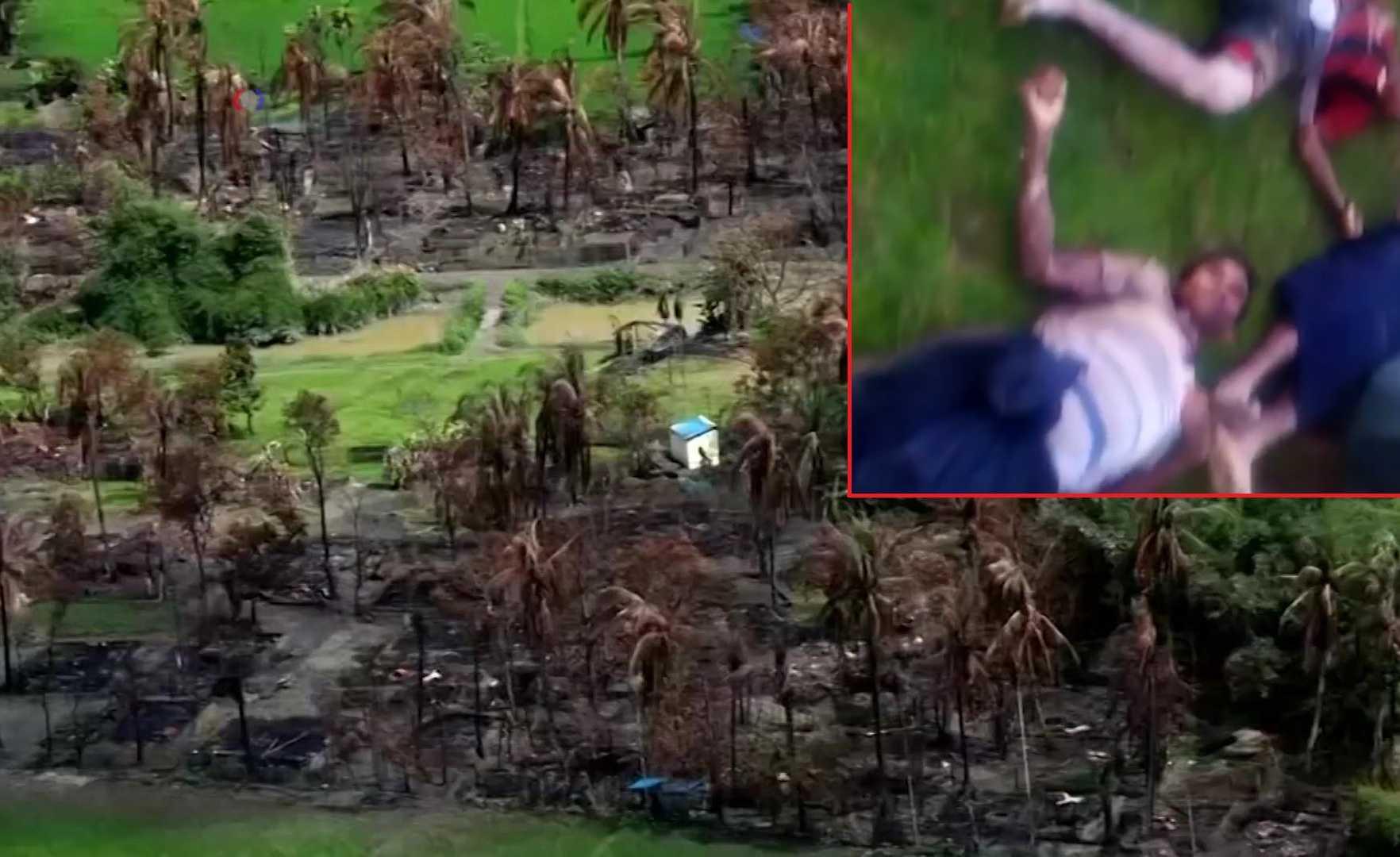
Major Islamic coalition demands MCMC action over fake content fuelling anti-Rohingya hate
Mapim calls for a multi-agency task force to investigate fake accounts, coordinated networks, AI-generated disinformation, fabricated statistics and manipulated videos fuelling anti-Rohingya sentiment.

Just In
A major umbrella group representing Malaysian Islamic organisations has urged the authorities to act against fake and hateful online content targeting the Rohingya, signalling a pushback from Muslim leaders in the country amid a xenophobic campaign against the refugee community that has been allowed to fester despite a series of false claims denied by government agencies themselves.
The Malaysian Consultative Council of Islamic Organisation (Mapim), which represents scores of Muslim groups and NGOs nationwide, also called for the setting up of a “National Digital Hate and Disinformation Monitoring Task Force” made up of the Malaysian Communications and Multimedia Commission (MCMC), police, the home ministry, as well as digital forensics experts and civil society groups.
“Its job is to identify fake accounts, coordinated inauthentic behaviour, AI-generated disinformation, hate campaigns, fabricated statistics, manipulated videos and incitement against ethnic communities,” said Mapim president Azmi Abdul Hamid.

He said MCMC, the internet regulator responsible for monitoring cyber threats and fake news, should investigate and take action against the spread of content fuelling hatred against the Rohingya community.
“Are we seeing a spontaneous spread of hatred, or is there a network of accounts deliberately manipulating public sentiment?” asked Azmi, adding that there is a danger of a coordinated effort to manipulate public sentiment.
He said the authorities must also investigate whether overseas accounts were being used to influence public sentiment in Malaysia.
“Do not allow social media algorithms to determine who Malaysians should hate.”
Mapim said the issue was becoming increasingly serious, with fake quotes, manipulated videos, fabricated statistics and artificial intelligence-generated content circulating on social media.
It said that while not all the claims may be fake, they must be proven through investigation.
It reminded that MCMC itself had detected coordinated inauthentic behaviour (CIB) in a case in February involving content discussing race, religion and royalty, or 3R – a topic that had led to arrests and prosecutions – where Facebook and TikTok accounts were manipulated to influence public perception.
“Although the case is not specifically related to the Rohingya, the existence of such a pattern demonstrates that coordinated manipulation via social media is a matter that must be taken seriously.”
Artificial public pressure
For months, there has been a spike in online hate targeting Rohingya refugees in Malaysia, largely driven by misinformation and xenophobic rhetoric.
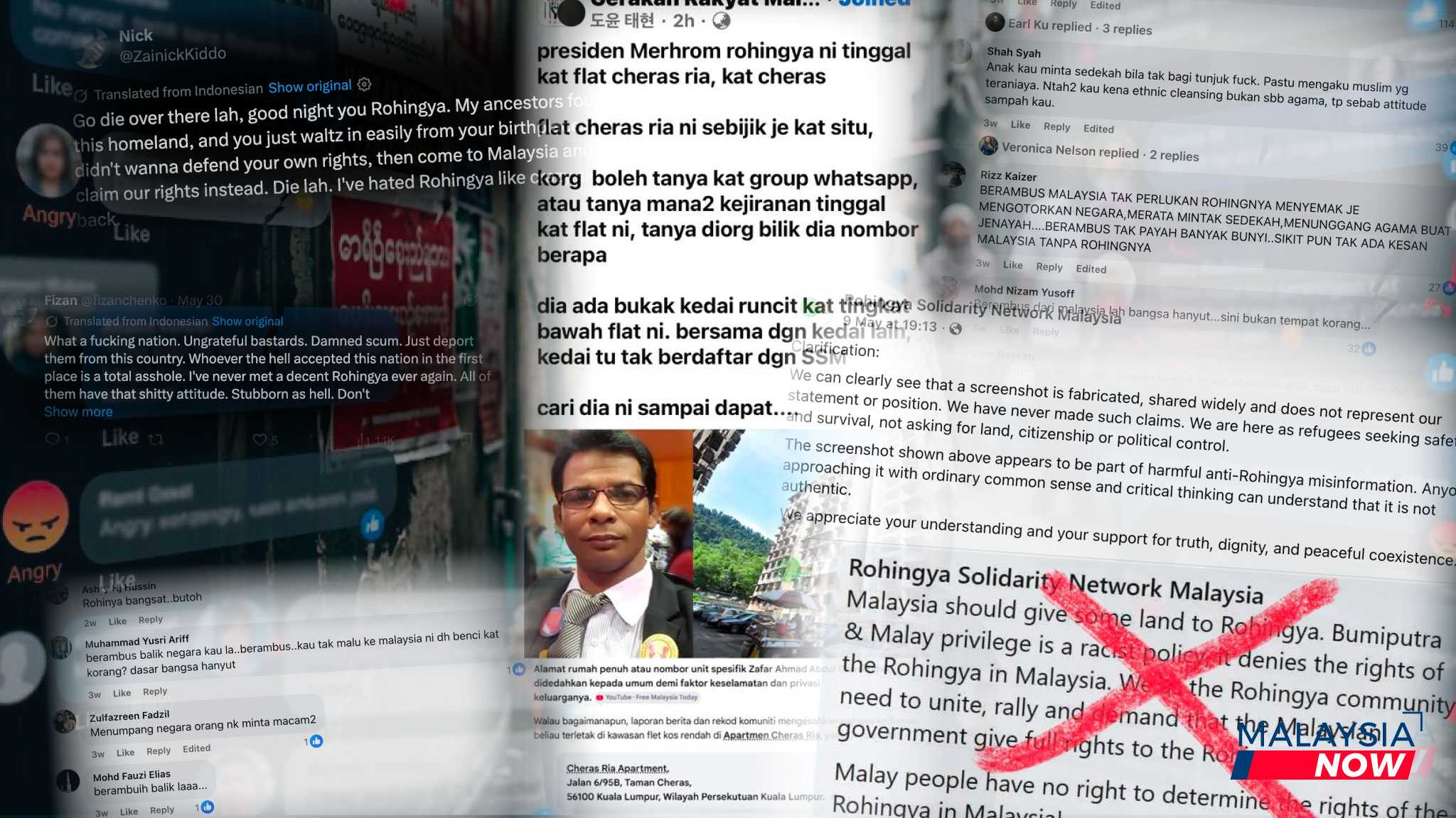 Checks showed that much of the content was spread by bots and fake social media accounts using hundreds of AI-generated videos to turn public hostility against refugee and migrant communities, similar to the campaign in Aceh in 2023, when an online hate drive spurred locals to demand the expulsion of Rohingya refugees, just months before the Indonesian presidential election.
The campaign has already found tacit approval among a section of Malaysian politicians, and the artificial pressure generated online has to some extent prompted the authorities to launch crackdowns against refugees.
In July, over 100 Rohingya asylum seekers, most of them women and children, were detained by immigration officers after being driven out of their homes in Penang and forced to turn to the UNHCR office in Kuala Lumpur to seek assistance for resettlement.
This was followed by Prime Minister Anwar Ibrahim’s sudden reversal of Malaysia’s decades-old policy of protecting the Muslim refugees who were stripped of their citizenship by the Myanmar junta, alongside an announcement that a deal had been reached with the regime to deport thousands of Myanmar nationals under what is called a “voluntary repatriation programme”.

Last week, the first batch of about 1,500 people were sent back even as the Myanmar junta carried out an airstrike on a crowded market in Kyauktaw near Rakhine, which killed at least 49 people and injured 58, many of them women and children.
The move was criticised by UNHCR and condemned by scores of global bodies such as Amnesty International, Asylum Access and Doctors Without Borders.
“It is sending people back to a killing field,” the Arakan Rohingya National Council (ARNC) said, as quoted by Al Jazeera.
Reminder to Muslims
Mapim’s call is significant amid an absence of condemnation from muftis and other Islamic leaders over the hate campaign targeting neighbouring Muslims who fled persecution.
But a prominent Muslim preacher broke that silence last month when he issued a stinging rebuke of those trying to “de-humanise” the Rohingya.

Firdaus Wong warned that this is a prelude to greater crimes, much like the Nazi-era atrocities against Jews and the current genocide against Palestinians.
“The way we dehumanise them – and I will be as blunt as possible – is just a carbon copy of how the Nazi had done to the Jews. They begin by dehumanisation first, then they will start to justify with a greater crime,” Wong told an Islamic convention on Sept 13.
“That is not what our Prophet teaches. Prisoners of war also have their rights, you should give them the food that you eat. Those are prisoners of war who fought against (our) religion, against Allah and His Messenger, but yet their rights are still being given.
“(It is) the same way we dislike Western media portraying all Muslims as terrorists, just because there is a small group of people representing our faith who commit atrocities.”
Echoing similar concerns, Mapim’s Azmi said Malaysians should not allow hatred towards the Rohingya to be normalised.
“We can have differing views on government policies. We can debate the issue of immigration. We may call for better border controls. We can demand enforcement of the law against crime. However, all such demands must be grounded in facts and justice,” he added, before going on to quote from the Quran: “And let not the hatred of others to you make you swerve to wrong and depart from justice.”
‘Viral does not equate truth’
In its statement today, Mapim pointed to several cases involving claims about the Rohingya which were subsequently denied by government agencies.
They include a denial by the National Registration Department that Rohingya had applied for Malaysian identity cards, and the Road Transport Department’s (JPJ) denial that it would allow the refugees to obtain driving licences.
It said by the time JPJ lodged a report with MCMC seeking action, the claim had already gone viral and attracted thousands of comments.
“Mapim is deeply concerned about the tendency to treat short videos, images, comments and social media posts as ‘evidence’ before their authenticity has been verified.
“The public must stop drawing conclusions based solely on content that has garnered thousands of views or shares.
“Going viral does not mean it is true. A deluge of comments does not equate to fact,” said Azmi.
See more of our coverage in your search results.
Subscribe to our newsletter
To be updated with all the latest news and analyses daily.