Key architect of Anwar's reformasi says it was wrong from the start, current criticism 'makes a lot of sense'
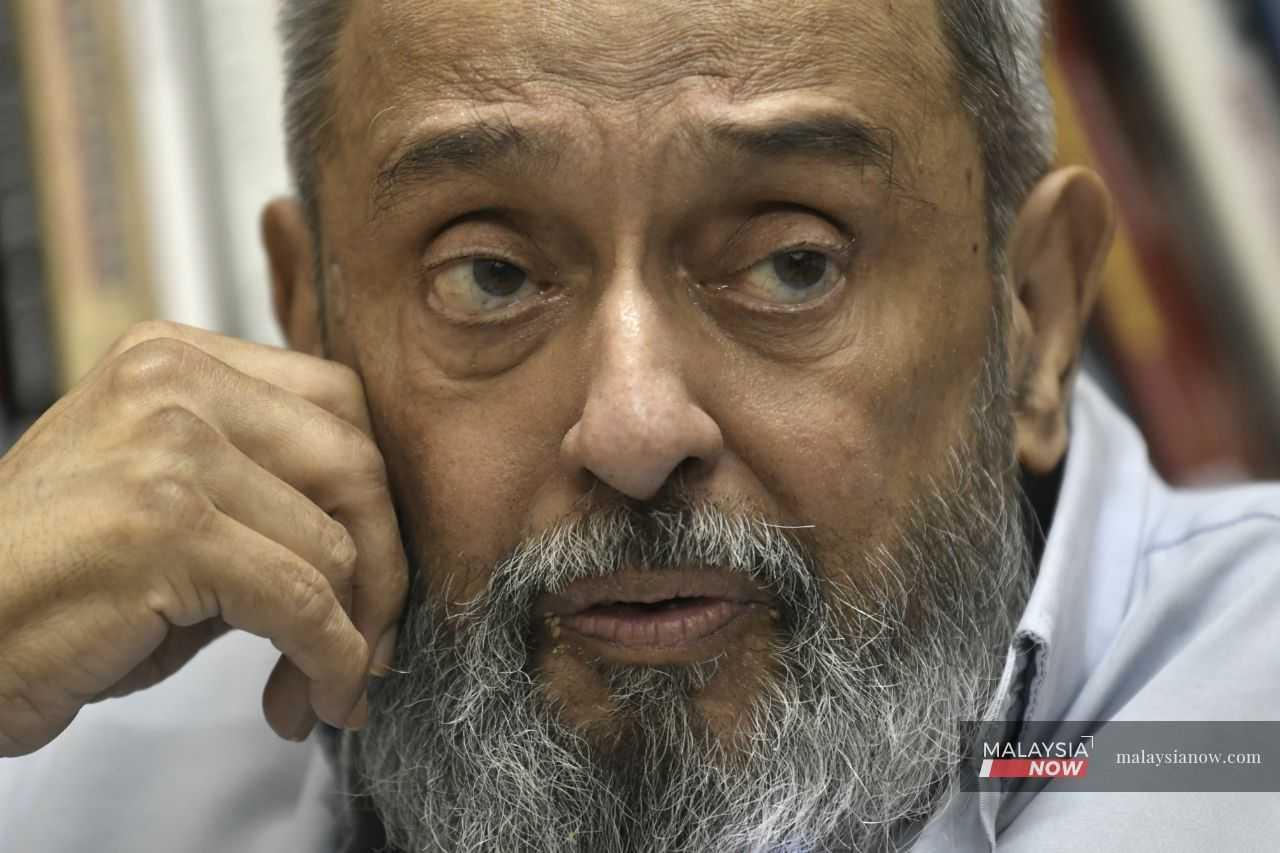
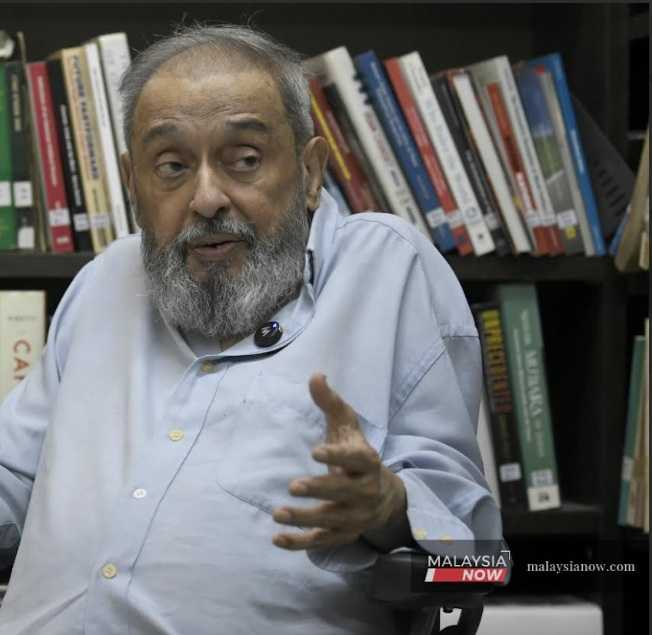
Academic and social critic Chandra Muzaffar says he is keeping an open mind but so far has not seen anything new emerging from the present government.
Just In
One of the main architects of Anwar Ibrahim's reformasi movement in the late 1990s says the growing disenchantment with the administration over its failure to make good on a series of promises "makes a lot of sense", suggesting that the inability to implement reforms is due to the fallacy of the reformasi movement once led by the prime minister.
Chandra Muzaffar, one of a small number of prominent thinkers who had backed Anwar after the latter's unceremonious removal from Dr Mahathir Mohamad's Cabinet in 1998 over allegations of immorality and incompetency in dealing with the Asian currency crisis, said the reformasi in Malaysia started on the wrong foot, seeking to replicate the reformasi movement in neighbouring Indonesia a year earlier which ended the Suharto regime.
"It was very naive because it was a different situation altogether," Chandra, who fell out with Anwar just months after playing a major role in the formation of Parti Keadilan Nasional, the precursor to PKR, told MalaysiaNow in a recent interview.
"For those who are interested in genuine change, I think this is an important factor to keep in mind. You have to take into account context, history, the dominant circumstances, and the milieu in which people are operating before you can draw conclusions about one country and another," said Chandra.
Chandra, one of Malaysia's most prominent thinkers whose support was critical for Anwar in his attempt to galvanise international sympathy amid charges of sodomy and abuse of power, said the reformasi movement in Malaysia "was basically a struggle within Umno".
"I think it would be naive for anyone to believe that it was going to become the conduit for major reforms because it was basically within Umno, what was taking place."
He added that Malaysia had never had the sort of iron-fisted rule that Indonesia experienced under Suharto.
"You've had, of course, authoritarian policies here and there, but you can't talk of a totally authoritarian system, a system that had no space, no scope for differences of opinion. That was never our reality," he said.
"And this is why, just using the reformasi slogan in 1998 and hoping to bring about a change akin to what was happening in Indonesia – I think that was very naive."
Chandra said the current opposition would do good to avoid making a similar mistake by comparing the Malaysian situation with that of Indonesia, which was recently rocked by massive protests targeting economic disparities and the political elite.
"Apart from the fact that Indonesia is our neighbour, and there are many parallels in our history, I don't think (the Indonesian protests) are going to bring about a major change in this country," he added.
Nevertheless, Chandra, who also leads the NGO International Movement for a Just World, said the grievances were the same.
"There has been a greater and greater concentration of disparities in wealth. Those things are there in Malaysian society, too. And we have not been able to bridge the gap between the communities."
'Nothing new has emerged'
Asked about the growing voices against Anwar for his failure to implement reforms, Chandra, who once famously warned that it would be an "unmitigated disaster" should Anwar come to power, said despite this belief, he had always kept an open mind.
"Well, as a student of politics, I keep an open mind. At that time, he was not in power. He's now got power. He should be given the chance to prove himself. He has been at the helm for two years. Let's wait and see. I don't think it's fair to judge him at once and say, 'Look, you have failed completely'."
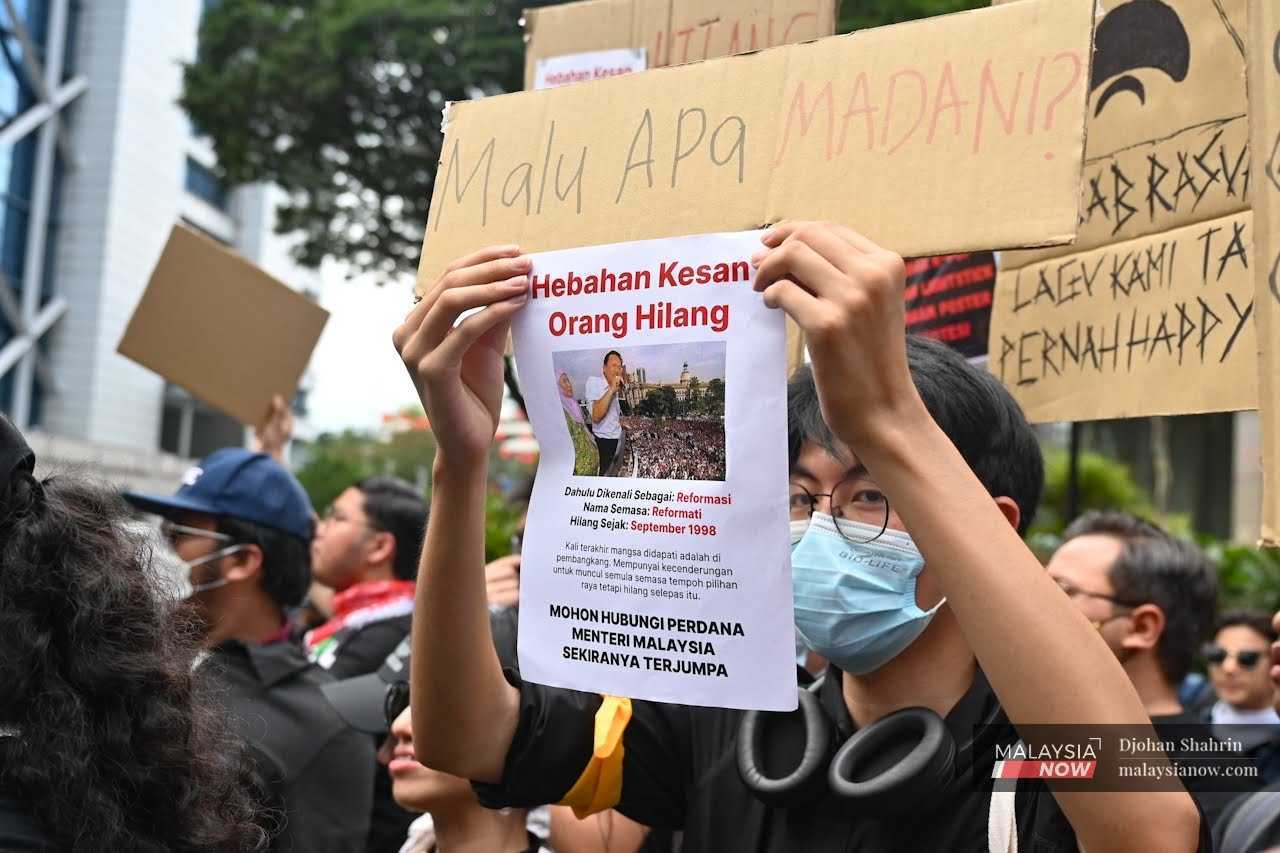
But Chandra also admitted that the growing criticism of Anwar's leadership "makes a lot of sense".
"They're saying now you're in power, there are certain things you can do. And the people in power should be held accountable.
"You need not do all the things that you may have promised. It's not that easy. But certain things you can do and you should try to do. People expect this," he said.
"That's the reason why people are disillusioned. If you look at almost every area, whether it is politics, economy or ethnic relations, nothing new has emerged."
Chandra said the idea of reforms had become more distant since Anwar came to power.
"I don't think there's much space for reforms and I think it's also the civil society groups that are to blame. They're not taking up this role. Many of them have ceased to talk about social change in that sense," he added.
 Anwar's supporters have sought to justify the failure to implement reforms such as the abolishment of draconian laws and the resolution of systemic corruption, economic disparities and crony capitalism by saying that the government was built on power-sharing with Barisan Nasional.
They say that the government formed in the aftermath of the 2022 election to break the impasse caused by the hung Parliament is not a Pakatan Harapan (PH) government but a coalition government.
Chandra however said that the current partnership was Anwar's decision.
"It was not forced upon him and he wanted that partnership because it was going to benefit him. Why did he pursue it, knowing that the man who was at the helm of Umno is a person who had all these charges?" he said, referring to Umno president Ahmad Zahid Hamidi, whose trial on 47 corruption charges was abruptly called off less than a year after the addition of support from Umno MPs.
Chandra also said it was no surprise to see compromises by Anwar and PH as part of the bargain, including the preservation of Zahid's position to ensure that Anwar became the prime minister.
See more of our coverage in your search results.
Subscribe to our newsletter
To be updated with all the latest news and analyses daily.