
Bombs, blasphemy and Christian Zionists: An Easter warning
The grotesque contradiction at the heart of those who preach love on Sunday and justify war on Monday.
Just In
The attempt to dress violence in the language of divine will is as old as empire, and just as morally bankrupt.
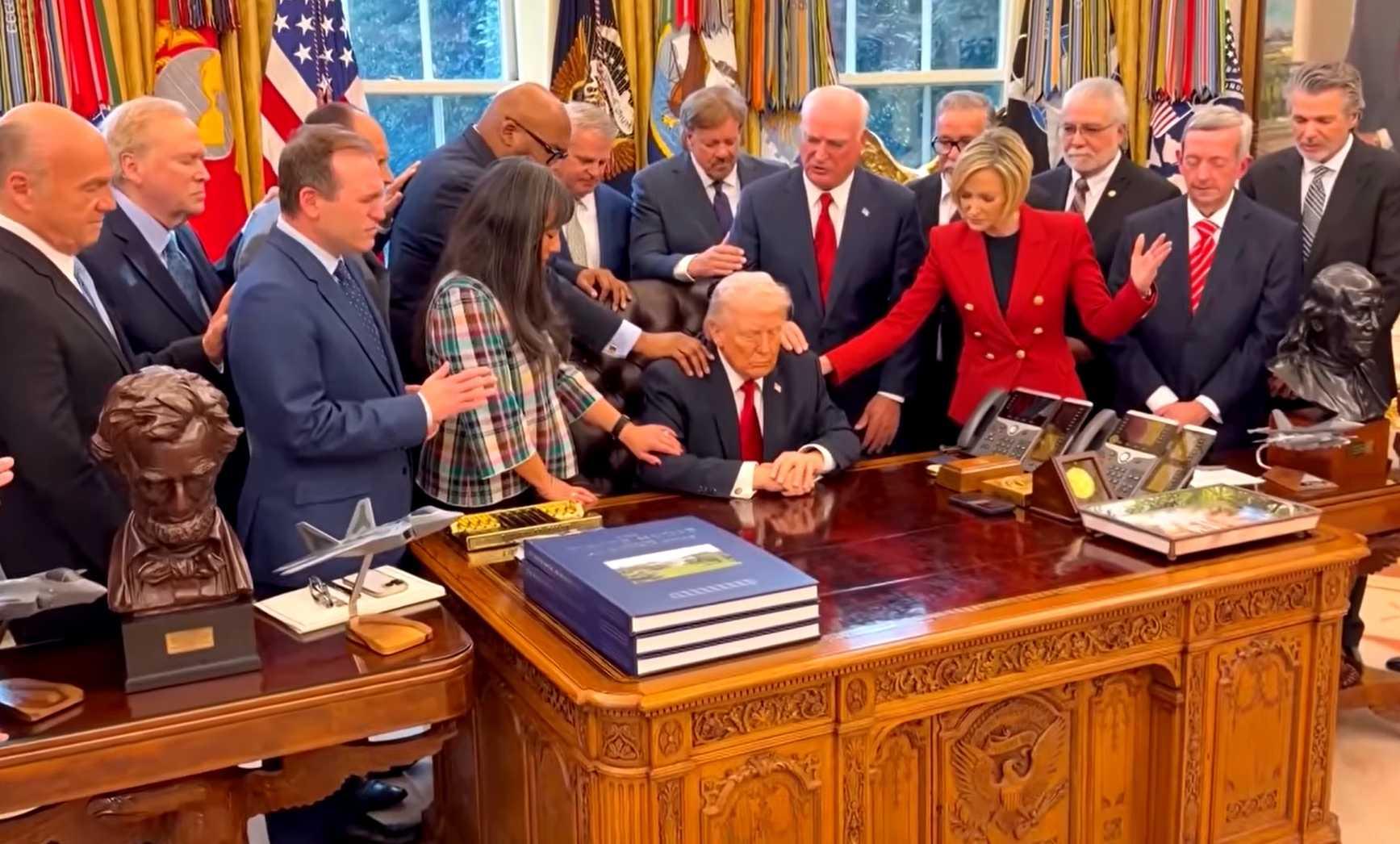
The recent bombing of Iran ordered by Donald Trump, and the chorus of justification from self-styled Christian Zionists, is not merely a geopolitical act. It is something far more dangerous: the fusion of racism, militarism, and theological distortion into a single, combustible ideology.
Let us be clear. To claim that the bombing of a sovereign nation is “God’s intention” to punish an “evil regime” is not faith — it is blasphemy masquerading as piety.
It reduces God to a tribal war deity, conveniently aligned with the strategic interests of one superpower. This is not Christianity; it is propaganda with a cross attached.
The Easter message delivered by Pope Leo offers a stark moral contrast. Easter, at its core, is about sacrifice, redemption, and the triumph of life over violence. It is a reminder that the divine cannot be invoked to sanctify destruction.
A God worthy of worship cannot be conscripted into bombing campaigns. When religious leaders speak with moral clarity, they expose the grotesque contradiction at the heart of those who preach love on Sunday and justify war on Monday.
What we are witnessing is not just hypocrisy; it is a deeply racialised worldview.
Iran is cast as inherently "evil", its people reduced to caricatures, its society flattened into a target. This is the same logic that has justified countless injustices across history: the dehumanisation of the Other as a precondition for violence.
There is no rationality to racism. There never has been.
Consider the Chinese Exclusion Act, one of the most blatant examples of institutionalised racial discrimination in modern history. Chinese migrants were depicted as threats—alien, unassimilable, dangerous. These were not reasoned judgments; they were fear-driven fantasies dressed up as policy. And yet, the consequences were real: exclusion, humiliation, and generations of suffering.
Fast forward to the present, and the pattern persists. Anti-Chinese racism has resurfaced in recent years, particularly during times of geopolitical tension and global crisis. People of Chinese descent have been scapegoated, attacked, and treated as perpetual outsiders.
Again, there is no logic to this—only prejudice, amplified by political opportunism.
The same irrationality underpins the demonisation of Iran. Entire populations are judged not as individuals but as embodiments of an abstract "evil". Once that narrative takes hold, violence becomes easier to justify. Bombs fall more readily when those below are seen not as human beings, but as enemies of God.
It is worth remembering, too, the historical irony, indeed, the moral inversion, at play here.
Today, some Christian Zionists present themselves as defenders of Jewish destiny, invoking biblical narratives to support modern political agendas.
Yet history tells a different story.
For centuries, Christians in Europe were among the worst oppressors of Jews —subjecting them to persecution, expulsion, forced conversion, and massacre. The legacy of Christian antisemitism is long and brutal. It should instil humility, not self-righteousness.
To now claim divine authority in matters of war, while ignoring this history, is not just ahistorical; it is dangerous. It suggests that lessons have not been learned, that the machinery of exclusion and violence can simply be repurposed with a different target.
The real Easter message, the one worth holding onto, is not about vengeance or punishment. It is about the refusal to answer violence with violence, the insistence on the dignity of every human being, and the rejection of hatred in all its forms. It calls for moral courage, not militaristic fervour.
If faith is to mean anything in the modern world, it must stand against the weaponisation of religion. It must challenge the narratives that turn people into enemies and wars into holy missions.
And it must remind us, again and again, that there is nothing divine about dropping bombs on human beings.
What we are seeing is not the will of God. It is the failure of humanity dressed up in the language of righteousness, but exposed, ultimately, as what it is: racism, power, and the tragic refusal to learn from history.
Kua Kia Soong is a former MP and director of human rights group Suaram.
The views expressed in this article are those of the author(s) and do not necessarily reflect the position of MalaysiaNow.
See more of our coverage in your search results.
Subscribe to our newsletter
To be updated with all the latest news and analyses daily.
Related Articles


Most Read
No articles found.