'Massive' red flags but no report by bank, court told in Najib's 1MDB trial
He agrees that this might have been to balance the commercial interests of BSI Bank.
Just In
A former Singaporean banker told the Kuala Lumpur High Court today that there were obvious red flags in relation to 1MDB transactions at BSI Bank, but that the bank never filed a suspicious transactions report (STR) to the Monetary Authority of Singapore (MAS).
Kevin Micheal Swampillai, 59, who worked at BSI Bank Singapore from 2010 to 2016, said any bank had a duty and was legally bound to file the STR with law enforcement once a red flag was spotted, to alert the authorities.
"Obvious red flags here means that these were politically exposed person types of accounts. In this case, the government of Malaysia’s entity (1MDB) was opening accounts with a relatively small and private bank, where typically the accounts’ signatory would be a single individual.
"The transactions (at the bank) were approved by that single signatory without board minutes and the use of obscure fiduciary funds structures. All of these are examples of massive red flags. I would imagine a bigger bank had stepped in and stopped these transactions."
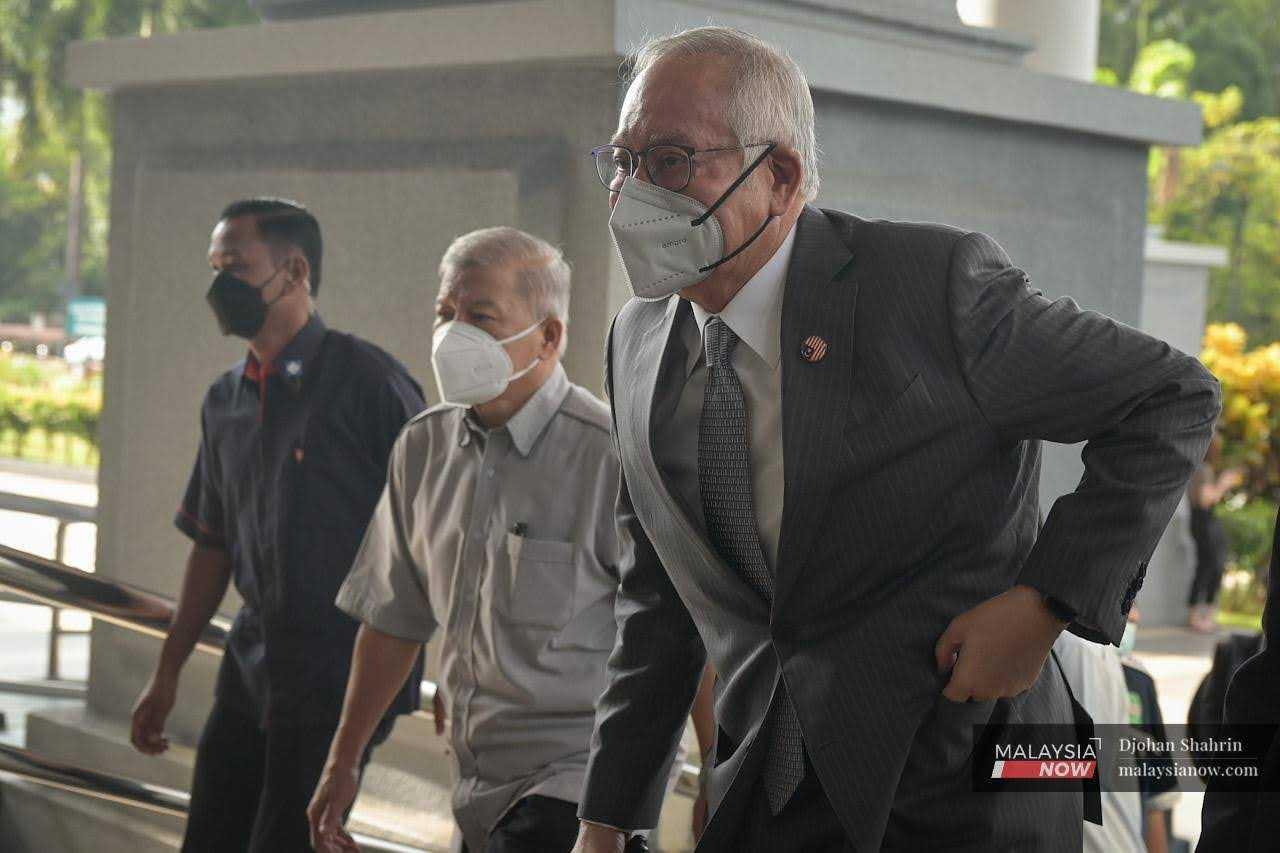
He said this during cross-examination by Najib Razak’s counsel, Muhammad Shafee Abdullah, at Najib’s trial on the misappropriation of RM2.3 billion from 1MDB funds.
The 44th prosecution witness also agreed with Shafee’s suggestion that the STR in relation to 1MDB transactions was not filed to balance the commercial interests of the bank.
Shafee: Can you tell us what would happen if an STR was lodged?
Kevin: The fact that the bank would file an STR regarding one of its clients, typically it would be a prelude to an account closure. It is an indication that it (the bank) already made a decision to terminate the relationship with that client.
Kevin added that filing an STR would mean that the bank was prepared to go legal and ready to cooperate with the authorities in terms of providing information as well as transactions undertaken through a specific client’s account.
"There are severe penalties for the bank for not hearing these provisions as what happened in the case of BSI Bank in terms of its licence being pulled and terminated," he said.
Further questioned by Shafee, Kevin said BSI Bank made around US$250 million in fees from 1MDB and its related companies as they were the single largest client in terms of transaction volume and revenue.
Kevin also recalled a time he had been on a teleconference call together with Najib and BSI’s then relationship manager Yak Yew Chee, where the former prime minister was asking about the valuation of a Bridge Global Absolute Return Fund investment.
"He (Najib) ended the call by asking for documentation that would attest to the value of the fund. My impression was that he was concerned and this was communicated to Yak. The nature of the concerns I was not privy to, but it was on the value of the fund where 1MDB monies ended up," he said.
The trial before justice Collin Lawrence Sequerah continues tomorrow.
Najib faces four charges of using his position to obtain bribes totalling RM2.3 billion from 1MDB funds and 21 charges of money laundering involving the same amount.
Subscribe to our newsletter
To be updated with all the latest news and analyses daily.